


This year is flying by, and yet another Valentine’s Day has been and gone. But I noticed a real missed opportunity, brands could be emphasising Galentine’s Day in a commercial, culturally relevant fashion. And not as a novelty, pink prosecco, afterthought.
Because right now, friendship is aspirational in a way that romance just… isn’t.
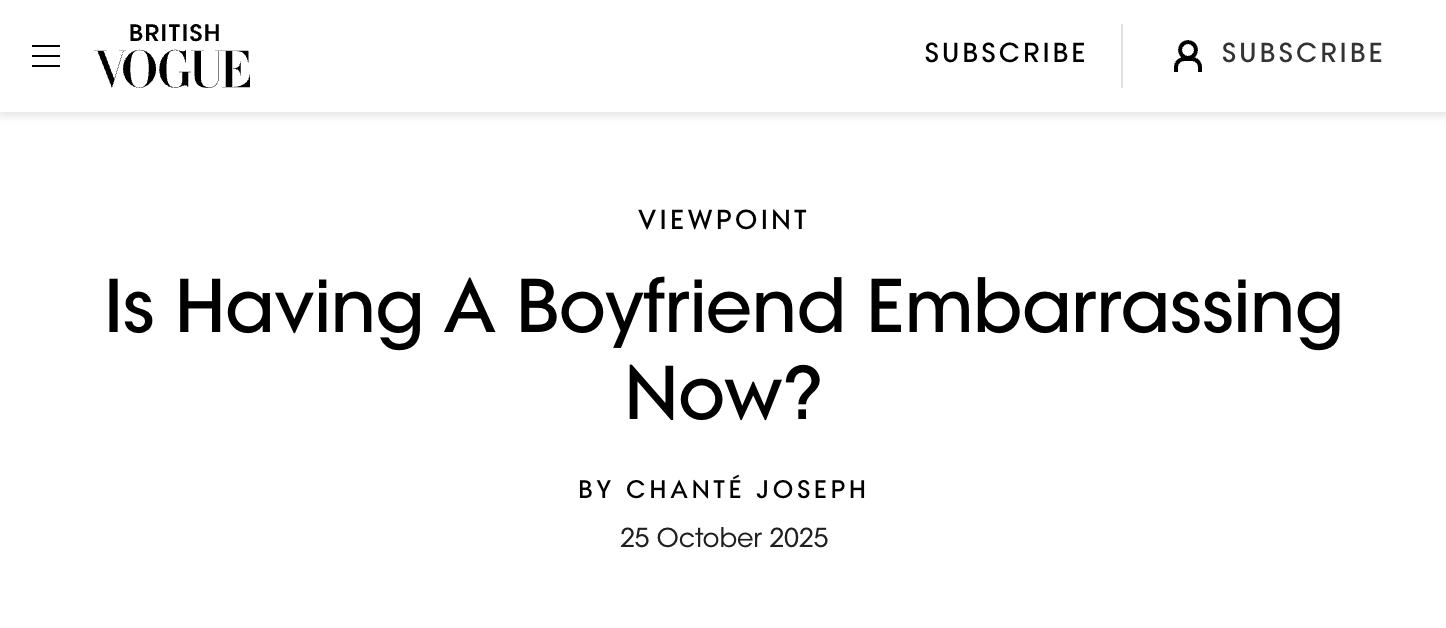
Matter’s 2026 insights said that in the US, only 38% of single women are actively dating, compared to 61% of single men. Vogue recently asked whether having a boyfriend is now embarrassing. Boysober discourse is flourishing, and there are movements like Korea’s 4B, as well as a dissatisfaction with dating apps. With Gen Z’s attitude to romance cooling fast, friends-first lifestyles are the new aspiration.
For a growing number of women, being single with a strong circle of friends is more aspirational than being in an all-encompassing relationship. I would argue romance no longer carries the same cultural or commercial weight it once did.
Why Galentine’s?
If you didn’t know, Galentine’s Day is celebrated on February 13th, it’s an unofficial holiday dedicated to celebrating female friendships and platonic love, originating from Parks and Recreation and summed up perfectly by the phrase “ladies celebrating ladies.”
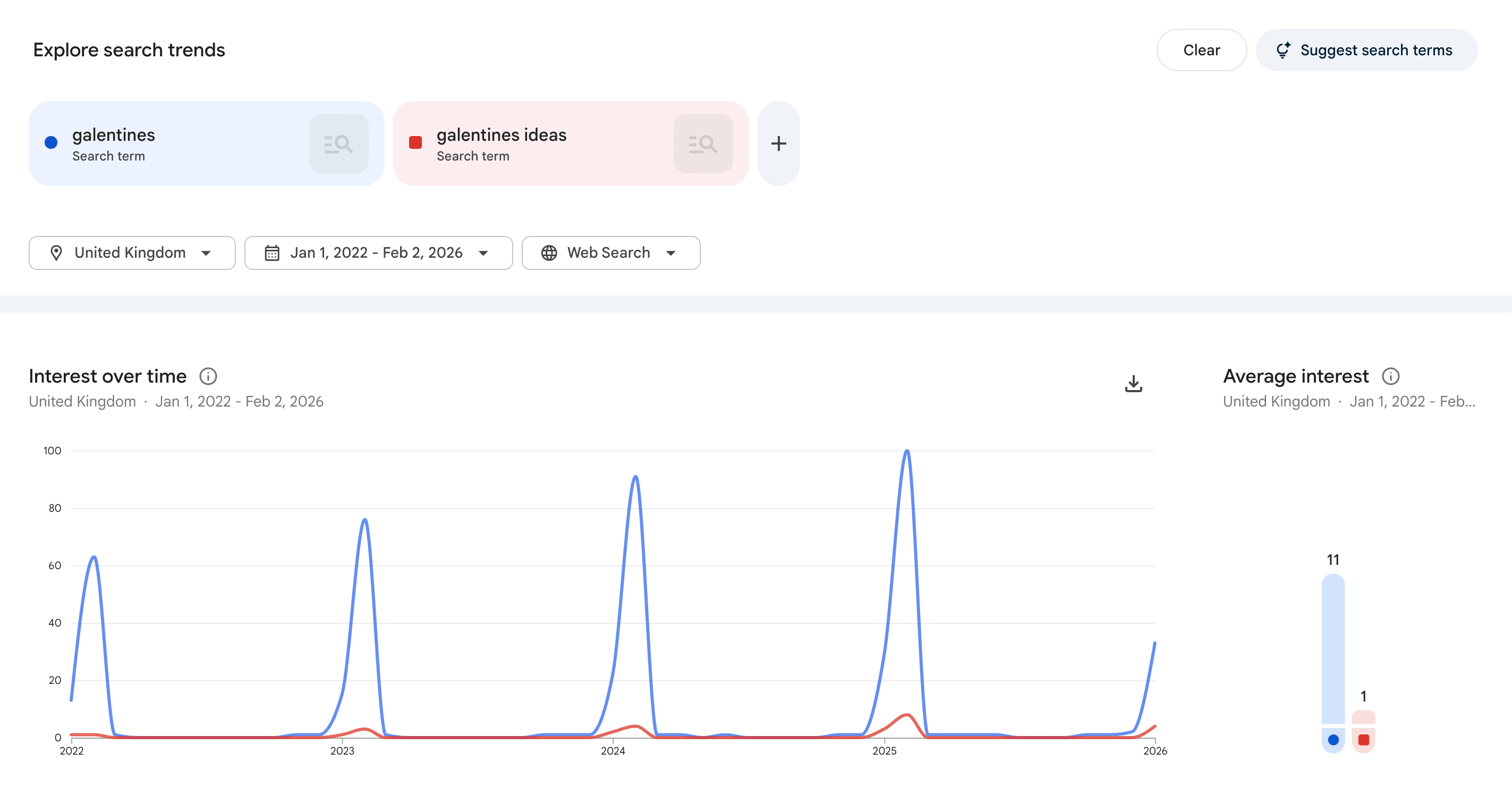
Google Trends shows a consistent year-on-year increase in UK searches for “Galentine’s,” with “Galentine’s ideas” starting to follow the same upward pattern. Women are actively searching for, planning, and organising these events. And crucially, women in relationships are attending too. The addressable market for Galentine’s is significantly bigger than for traditional Valentine’s.
The commercial behaviours are product-driven
Traditional Galentine’s activities tend to cluster around a few specific categories: crafting together, cooking and baking, cocktails and drinks, sharing food, and sometimes watching a terrible rom-com together.
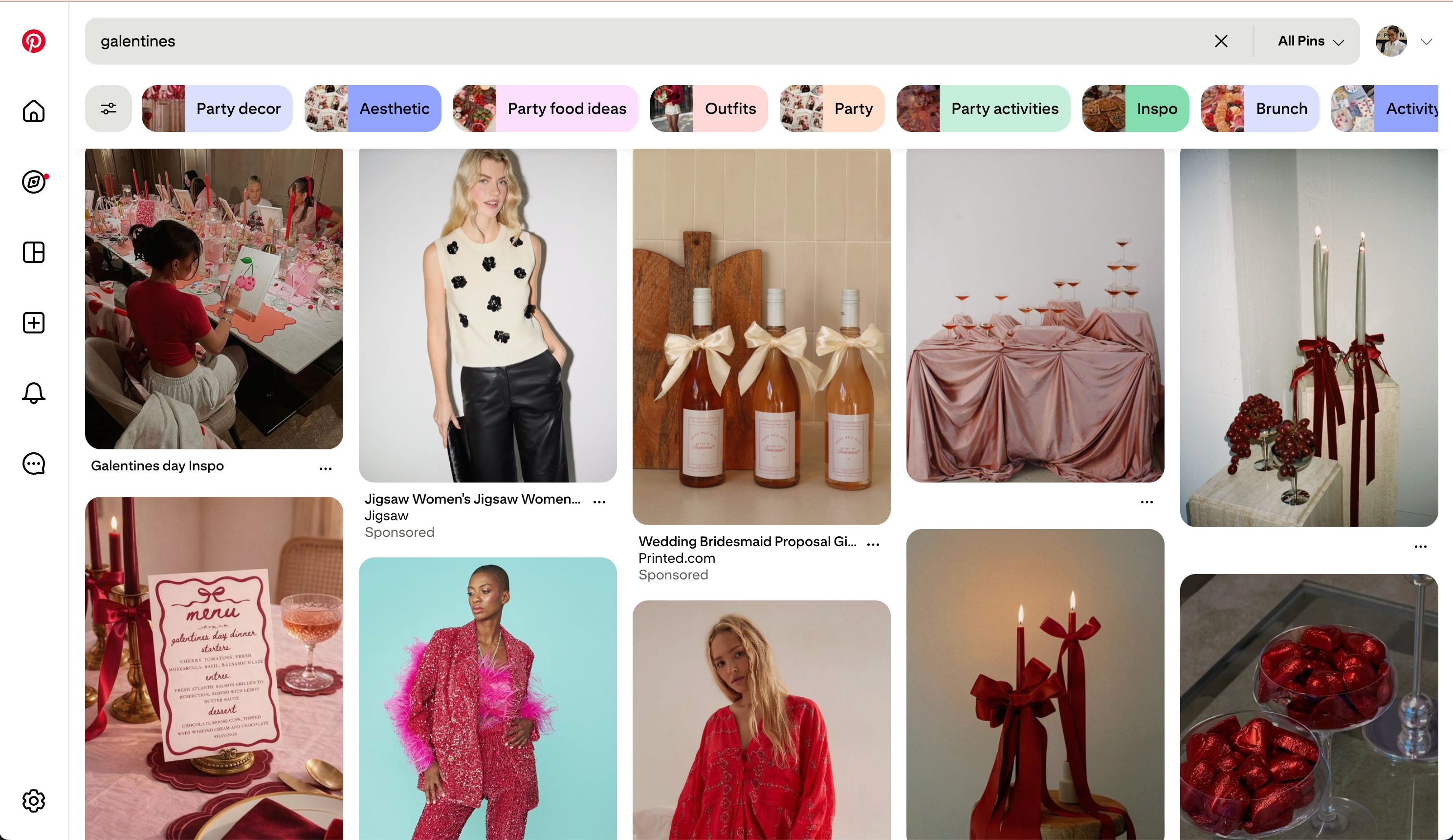
These are product-driven moments. Group behaviours. Purchases that serve three to four people, not just two. The commercial opportunity here arguably exceeds that of traditional Valentine’s Day.
The partnership opportunities are wide open
If brands went in on this angle, there’s so much room to play! Think about what brands could do in this space:
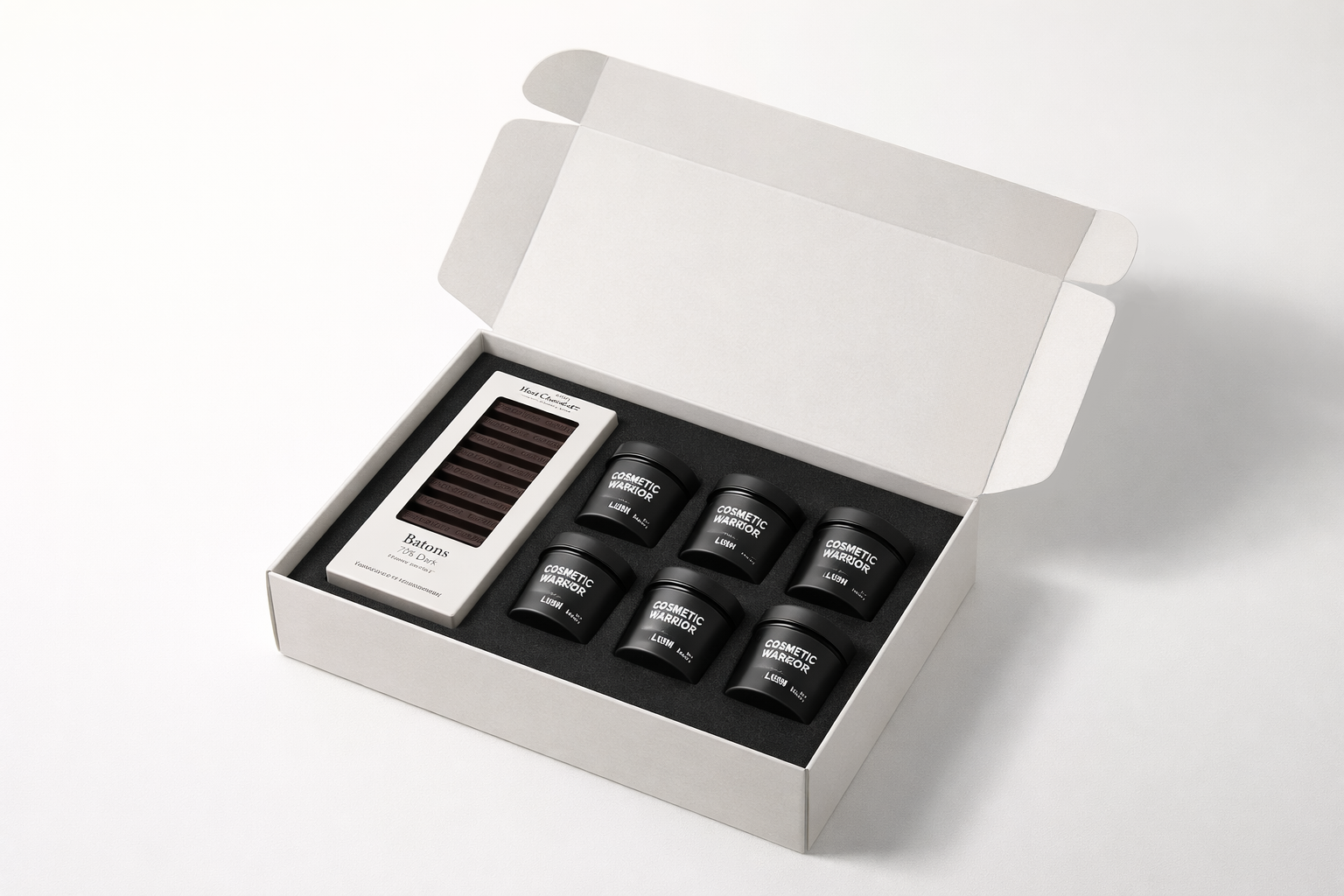
An M&S Galentine’s bundle, cocktails and picky bits for four. Or a Lush x Hotel Chocolat partnership, face masks and sharing boxes for a girls’ night in. Søstrene Grene DIY craft sets for four, paired with a prosecco brand. Buzzballz or a similar RTD brand leaning into friendship bracelet trinkets and four-packs. Beauty brands creating “girls’ night” sets.
The space is currently uncrowded, and there are no examples of it being elevated. A brand that committed to owning Galentine’s now would also earn much consumer trust, the halo of being seen as a “girls’ brand” or a “friendship brand” extends well beyond a single campaign moment.
I think the sectors that would be best positioned to profit are food, drink, beauty, and craft. Basically, anyone selling products that feel better shared.
How can your brand use this across the year?
Galentine’s is the most obvious entry point, but it’s not the only one. The brands paying attention are already scanning further ahead, looking at the cultural moments that aren’t traditionally celebrated and finding search volume, real spending behaviour and zero competition waiting for them.
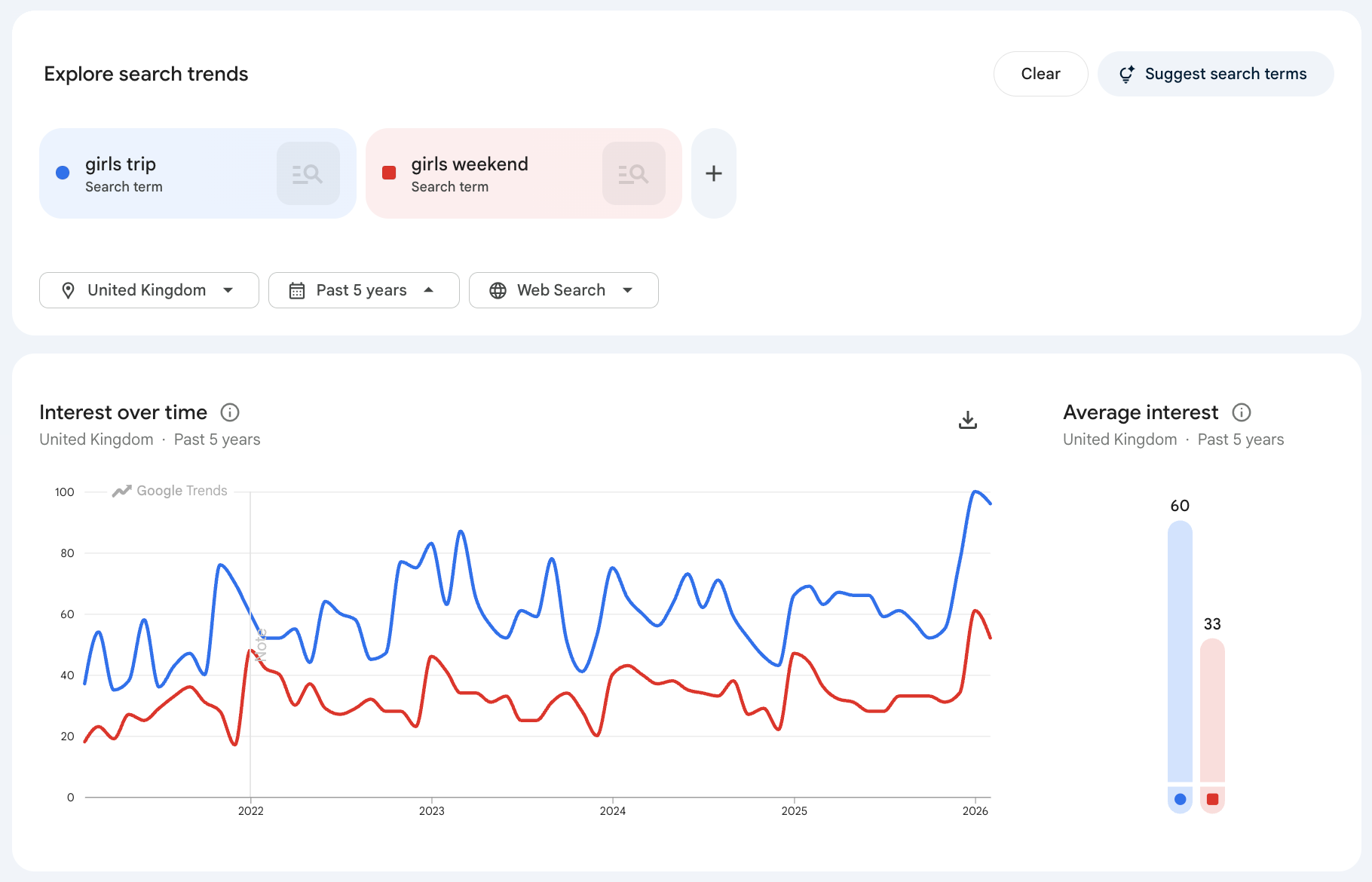
Take "girls' trip" culture. Google Trends shows consistent year-on-year growth in UK searches for "girls' trip" and "girls' weekend." Women are organising multi-day experiences together and spending on getting there, but also spending on the prep, the outfits and the group makeup.
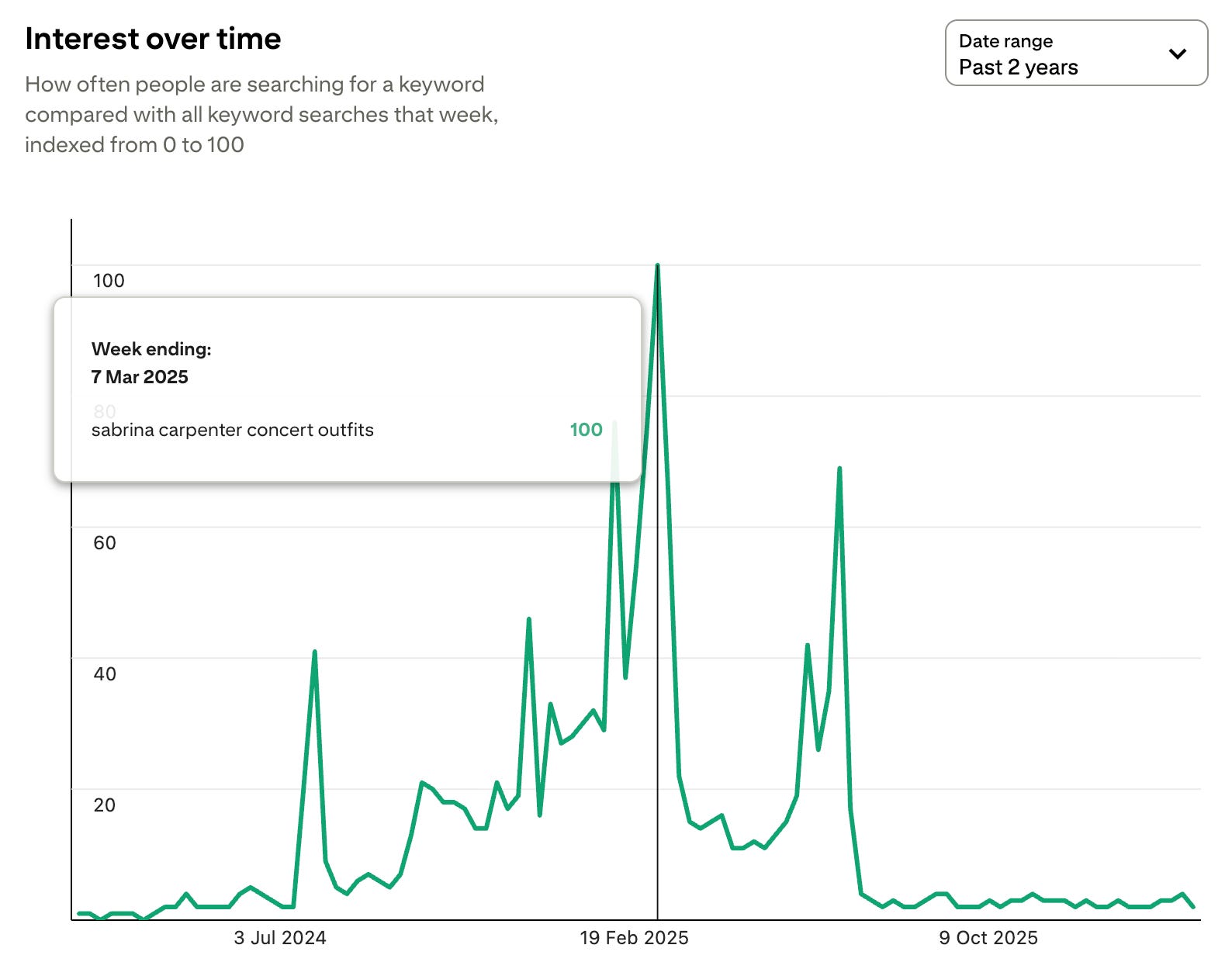
Women are even making rituals out of seeing their favourite musicians live, Taylor Swift's Eras Tour saw the average fan spend $1,300 per show on travel, outfits, food and merchandise, with bead shops near tour cities reporting sales up 500% from fans making friendship bracelets together. Sabrina Carpenter's Short n' Sweet Tour was described by fans and press alike as a "slumber party with the girls.” Fans coordinated outfits, shared GRWM TikToks, and recreated her corsets and rhinestone boots. Pinterest searches for 'Sabrina Carpenter concert outfits' spiked sharply with each tour leg, peaking at their highest point when the European dates launched in February/March 2025. Charli XCX's Brat, named Collins Dictionary's Word of the Year, became less an album than a group identity, with fans coordinating lime-green outfits and travelling to shows together. In 2024, music tourism in the UK alone hit £10 billion, a 26% increase, driven in large part by these three artists.
The same logic applies to female sports spectatorship. The Women's Euro 2022 final peaked at 17.4 million UK viewers, beating Eurovision 2022. By 2023, the Women's Sport Trust recorded 46.7 million UK viewers of women's sport annually. These are engaged viewers too, regular women's sport fans are 3.5x more likely to buy a product promoted by a woman athlete than any other influencer type. The viewing party is a product occasion sitting completely unclaimed, with drinks, snacks and outfits, are all presenting a real spending opportunity. Nobody owns it yet.
The pattern is consistent across all of it. Women organising for themselves, in groups, with real money behind it. The products are already there. What’s missing is the positioning.
The opportunity is already in your catalogue
For brands that already have bundle formats, party sizes, or group-friendly products, like sculpt clay group sets, sharing boxes, or multi-serve formats, they’d be able to own a category with minor reframing. The product is there. What these brands seem to be missing is the cultural context.
I think the brand that is the first to own the term “Galentine’s ideas,” “girls’ night in,” or “girls’ trip essentials” consistently, across multiple years, would build something a Valentine’s Day campaign never could. Your brand could be the answer to what women are asking all year round.
Where does that leave Valentine's Day?
Romance had a good run. But, I believe the most commercially interesting love story right now isn’t between two people, it’s between a woman and her people.
The brands still organising their entire year around traditional celebrations are working from an outdated map. Valentine’s Day, Mother’s Day, Christmas, these moments are crowded, expensive and increasingly disconnected from how a growing number of women actually live and spend. I believe the real opportunity is in the white space, the cultural moments with search volume, genuine spending behaviour, and no brand brave enough to claim them yet.
Galentine’s is one. Girls’ trips are one. Female sports spectatorship is one. The slumber party, the group concert, the pre-match ritual, these are all product occasions hiding in plain sight.
The audience is there. The spending is there. The only thing missing is a brand bold enough to move away from tradition and to pay attention to the culture.
That brand might as well be yours.