


Last week I was at Leeds BID’s food trade expo. I tried a lot of delicious food, spoke to a bunch of snack and drink brands, and the trend I kept clocking, surprisingly, was no longer protein. Protein has been having a moment, and now its moment is over. The f-word of 2026. The claim showing up on every new pack was fibre. The main topic of discussion? Poppi arriving in the UK.
So why fibre, and why now? And what even is fibermaxxing?!
Fibermaxxing is a trending TikTok-born movement structured around intentionally maximising your daily fibre intake through whole foods. beans, lentils, legumes, chia seeds (always chia seeds). You track your grams the way we track other macros. The target is 25g a day for women, 38g for men, which sounds reasonable until you learn that only 4% of adults meet the recommended 30g of fibre per day. The name follows the traditional Gen Z wellness naming conventions, along with looksmaxxing, sleepmaxxing, proteinmaxxing, basically just optimising a specific input for maximum output. On TikTok it looks like “can you eat 30 different plants this week” challenges, colourful bowls, and rippling abs.
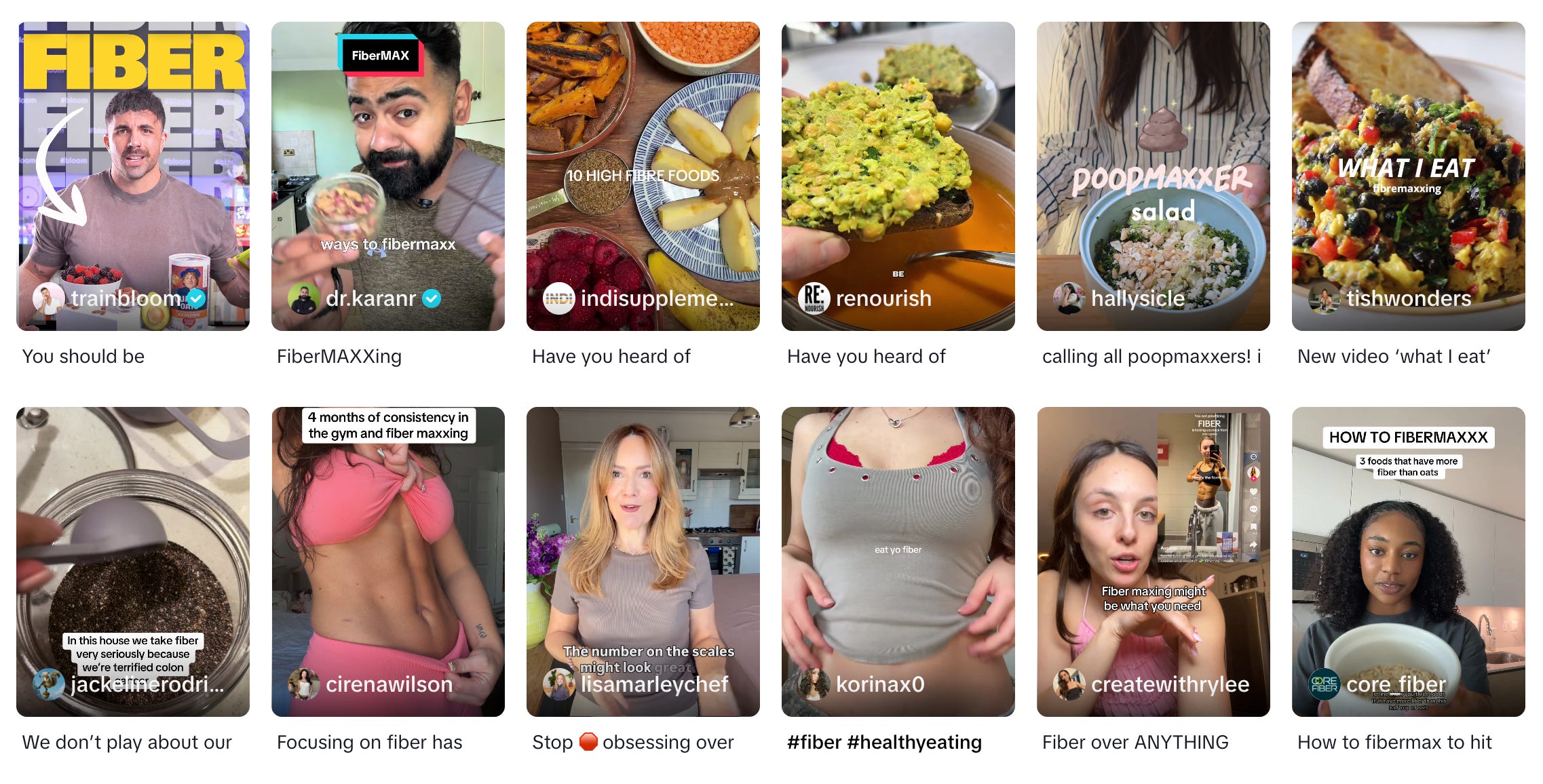
Why is it trending now? Well, I believe it is in part due to how GLP-1 drugs have restructured how a significant chunk of consumers relate to food. We are already seeing smaller portioned options in supermarket ranges, and consumers favouring quality over quantity. Fibre is key for someone on a GLP-1 as it is satiating, gut-supporting, and metabolically useful. Perfect for someone eating less but thinking harder about what nutrients count. That mindset seems to be bleeding into mainstream consumer behaviour even among non-users. Mintel tracked 37,091 online conversations mentioning fibre-rich diets in 2025 alone, up 9% year on year. According to CNBC 54% of consumers say they’re interested in high-fibre food and drink, which rises to 60% among Gen Z. Whole Foods called fibre-forward callouts on-pack “the next big marketing play for 2026.”
So, now every brand manager in functional food and drink might be asking, “How do we get fibre claims on the front of pack?”
This is where it gets interesting for those of us operating in the UK. The GB Nutrition and Health Claims Register is incredibly stringent for on-pack health claims, and post-Brexit, it runs entirely separately from EU rules. To make a “high fibre” claim, the product needs at least 6g per 100g or at least 3 g of fibre per 100 kcal.
The ASA (Advertising Standards Agency) keenly enforces this, in 2023 they ruled against Kellogg’s All-Bran Prebiotic Oaty Clusters, because the ad claimed "prebiotic goodness to fuel your gut" and "prebiotic oaty clusters," linked to small print stating the product contained 5.4g of chicory root fibre per serving. This was ruled insufficient, at just 45% of what’s required for a daily intake. On top of that, HFSS advertising restrictions came into force in January 2026. The regulatory environment is tightening, and it is not playing.
What does this actually mean in practice? It means that your claim has to be scientifically substantiated, and if it can’t be, your brand needs to be able to survive without it. If you strip the claim, you need to know what’s left?


UK gut health brands like Hip Pop, and Living Things have been working in this world for years. They’ve cleared the bar.
Which brings us to Poppi, and it’s arrival to the UK.
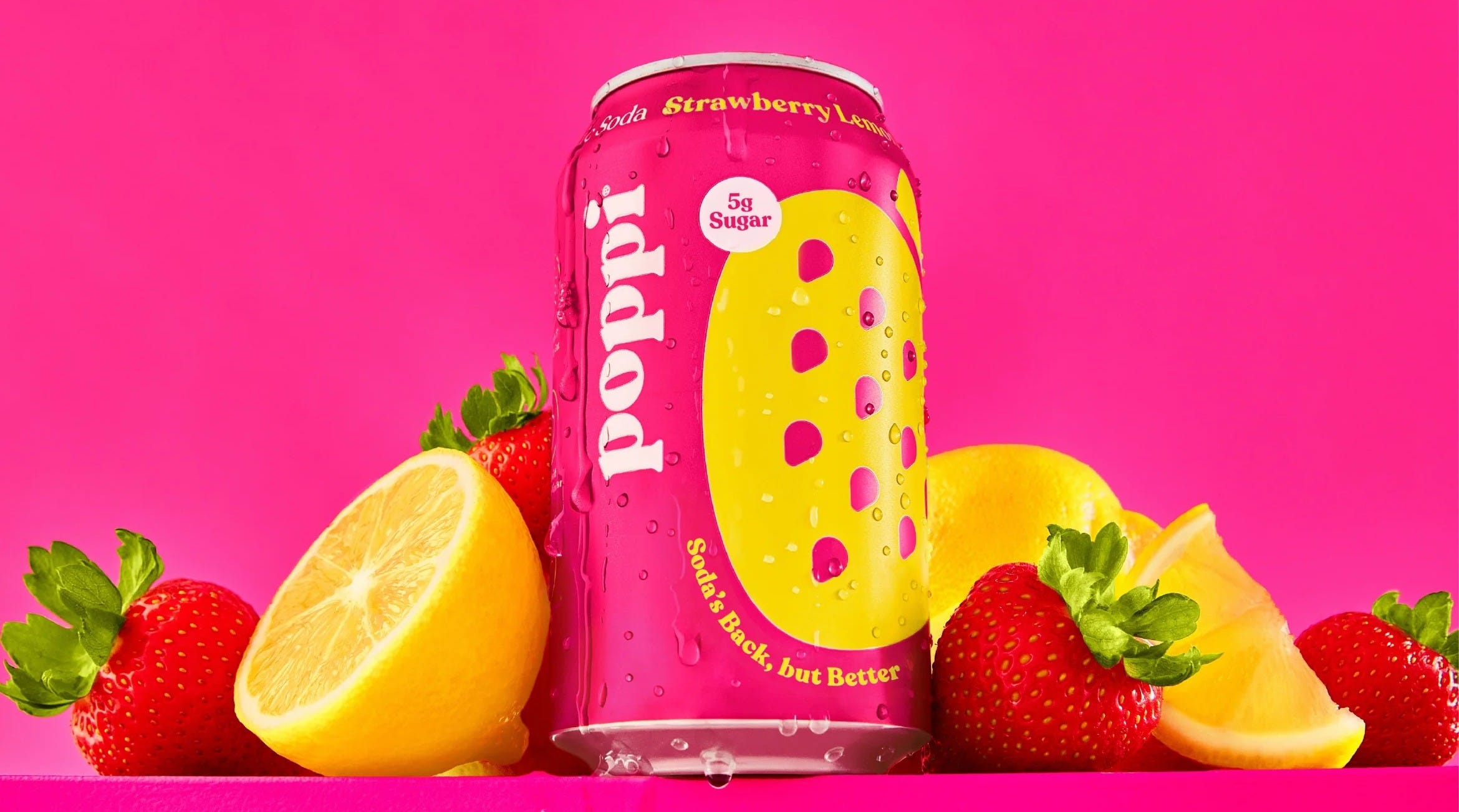
Poppi was founded in 2015, built by a husband-and-wife team from Texas who appeared on Shark Tank and turned an apple cider vinegar dink into a $500m-a-year brand. Poppi rebranded from "Mother Beverage" in 2020 to align with a more modern, vibrant image aimed at Gen Z and Millennial consumers, shifting from a focus on solely apple cider vinegar to a "prebiotic soda". Marketing-wise, they proliferated at the intersection of gut health and pop culture, with massive features at Coachella, and at the Super Bowl, and used the likes of Hailey Bieber, Kylie Jenner, Alix Earle, and Charli XCX as brand partners. The concept was built around this being a bright, maximalist, fun soda that you can feel good about. Their on-pack taglines include "Be Gut Happy. Be Gut Healthy." and “Soda, that loves you back”. PepsiCo bought it in 2025 for $1.95bn.
However, in 2024, a class action suit was filed in California alleging Poppi misled consumers about gut health benefits. The product only contained 2g of inulin fibre per can, which plaintiffs argued was too low to create any meaningful gut health effect. Poppi settled in July 2025 for $8.9m. denied wrongdoing, but paid out anyway. So that’s the brand that arrived in the UK in March 2026.
It’s fundamentally the same recipe. 2g fibre per can. The GB Register requires 6g for a high fibre claim, so Carlsberg Britvic, who distribute it here, confirmed “We do not make a prebiotic claim for Poppi in the UK due to local regulations.” The prebiotic story, a fairly core aspect of the brand identity, is gone.
Additionally, I believe their brand will suffer slightly due to their retailer choices. They launched in Tesco and Pret a Manger, two environments that are nothing alike. Tesco is mass, accessible, and all about the meal deal. On the other hand, Pret is aspirational, for the urban professional but pretty mainstream. Neither are living in the cool-girl wellness shelf Poppi was built for. Hip Pop and Living Things are already there, with better fibre content and actual UK brand equity. We know the UK consumer is more sceptical of functional claims but more likely to trust them when they're substantiated. Poppi has arrived, shouting, but ultimately claim-free due to publicly having been told its claim was misleading in its home market, into a competitor set that’s actually living the values to a higher standard.
We are yet to see how this plays out, they have time because PepsiCo has the distribution muscle and the patience to buy shelf space and wait for the brand to find its feet. However, I wonder if this will become a cautionary tale about what happens when your claim is load-bearing for your brand and turns out not to hold up entirely.
The fibre opportunity for F&B is very trendy and real, but this is a warning, don’t chase trends, and make sure your claims hold up, especially if you are trying to break into new international markets.
Yet to try a Poppi (largely because they don't appeal to me, but also because I've not heard a single compliment). The fact they're owned by Pepsi feels a bit icky, like they're trying to wade in on small brand territory and it's only a matter of time before they realise it's a no-go zone. Also their "soda that loves you back" tagline feels like a copycat of XOXO Soda's "show yourself some love". Not for me!