


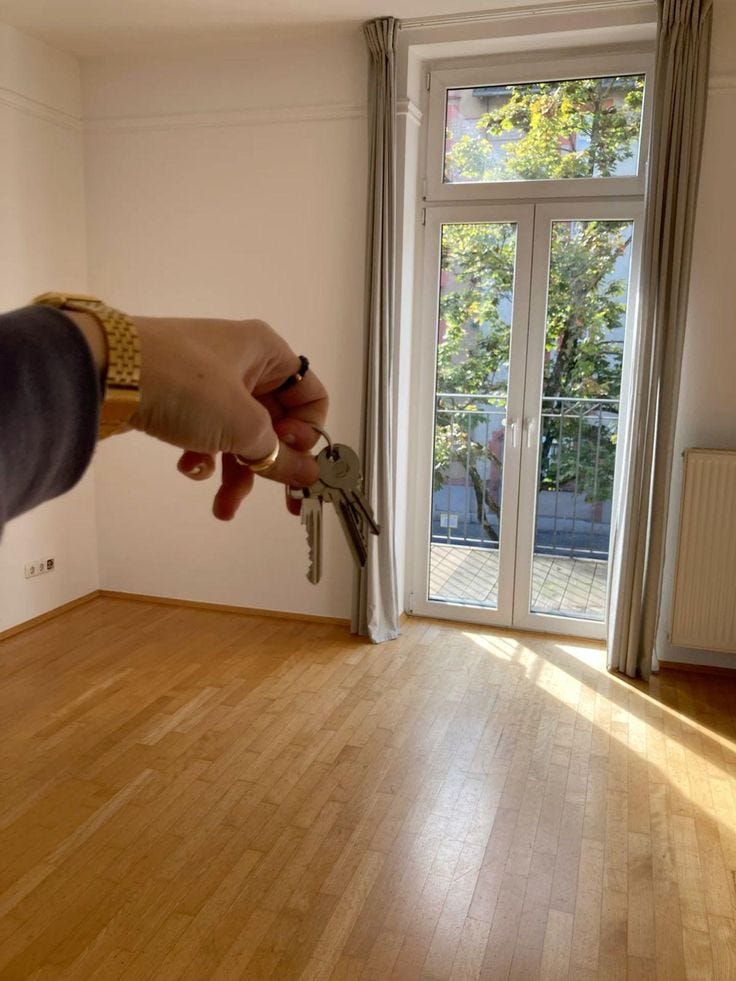
I bought a house recently. I know, “whooo!” but I’m not going to lie, I outsourced a lot of the research to Claude.
I gave it a price range, an area, and a list of things that were dealbreakers. I got it to cross referece things like was it north facing, sound pollution, even whether there was a yoga or pilates studio close enough to walk to. It came back with a shortlist. I then went to viewings and decided for myself.
The last time I moved, hunting for a flat, I did it the old way. Hours on Rightmove. Then Zoopla, then OnTheMarket, then every property site known to man. Squinting at floorplans at 1am, zooming into photos trying to work out if that was likely damp or just a shadow.
I’m definitely not the only one, two thirds of Gen Z now use ChatGPT to research brands, against 30% of boomers, so most people my age are doing some version of this now. We might not love AI, it might come for our jobs, but it is a brilliant data cruncher, and sorting 200 listings down to five relevant choices is exactly the kind of labour we’re happy to hand over.
I think this is what brands should be planning for, the buyer no longer sees 200 listings. They see three to five, and it’s happening in more sectors now: hotels, restaurants, skincare, insurance, flights, the lot.
Zero click discovery
The traditional playbook was about frictionless discovery. Rank well, buy the placement, sit at the top of Google or Rightmove, look good enough at the point of decision.
Agentic search takes that away. There’s no ad clutter to hide in and no packaging to be swayed by. The agent goes straight to structured data, reviews, third party mentions, and whether it can confidently work out what you are. Then it hands over a shortlist to your buyer.
Basically, it’s an ultra-strict gatekeeper, and the first casualty is the generic mid-brand, if there is no distinct identity for the model to latch onto and no reputation for it to verify, so you don’t make the shortlist.
Which creates a paradox for anyone who thought AI would flatten branding. You don’t need a strong brand despite agents. You need one because of them.
Doubled up validation
The brand now has to work hard at two separate moments, for two completely different audiences.
Firstly, for the bots you need enough of a digital and cultural footprint that the model can classify you as a top answer. Making sure it can access clean, structured data, and consistent entity recognition across the web, reviews, press, etc, is what gets you into the shortlist.
You also can’t fake your way there by writing on your own website. One study of 23,387 citations across five AI engines found that when someone asks about a brand by name, 48% of what the model cites is earned media, editorial, forums, review sites, directories, and only 23% is the brand’s own content. On review-type questions, it’s 82% earned. It’s not possible to optimise your way in, your brand has got to be talked about.
For the humans, you need enough emotional resonance that when the agent presents you, the person says yes. That’s driven by a strong, attractive brand.
I don’t know a single person who blindly accepts what their agent tells them. Everyone clicks the link and has a look. But if the human feels ambivalent, or doesn’t recognise you, or gets a weird feeling from the website, they override the recommendation and go back to searching manually.
Only 2% of people would buy from an AI-recommended brand without checking it first. 98% of consumers verify before buying after an AI recommendation. 45% say they immediately Google the brand.
Being recommended is not the same as being bought from, but it sure helps.
The human still has a veto
Lowkey, I think if an AI found me a flat that hit 100% of my numerical criteria, right price, right light, quiet street, but it was managed by a property brand I’d never heard of and the photos were blurry, dark, or grubby-looking, I would not book a viewing. I’d take that as a sign the search wasn’t quite fulfilled by the agent and carry on looking myself.
This says to me that, in this context, brand awareness has become a trust layer. It lets a human say yes to a suggestion they didn’t personally research.
This is a trend that will continue to grow, 62% of Gen Z and millennials say they prefer shopping with AI tools, compared with 51% of consumers overall. Although 75% say they'd lose trust in AI shopping entirely if they found out the results were sponsored. We don’t mind delegating to the agent right up until we suspect it's an advert.
AI is still bad at vibes.
When I was searching, I knew Claude could not tell me what a street felt like. It couldn’t tell me about neighbourhood energy, or whether I’d feel safe walking home at night, or that a place looks lovely in photos but sits next to a road that roars next to your head from 6am. That’s why I still validate, still read reviews, that’s why I still went for physical viewings. Models are exceptional at aggregating data against specific criteria. They are weak on texture, atmosphere and local knowledge.
If agents are doing the research, I think what actually builds reputation in 2026 is word of mouth, real-world presence, physical design, and driving culture, as they all help both gatekeepers trust you.
We’ll delegate choice, not taste
The last question, and the one I’ve been debating for a while, if we let AI shortlist our clothes, our homes, or hotels, are we quietly handing our identity over to the average preference of a language model?
I don’t think so, I don’t know anyone who’d use AI to shape their taste. They’d use it to find a dupe of a specific coat, or a cheaper version of a pair of shoes they’d already decided they wanted. They’re not asking it what the look should be in the first place.
Homes, or hotels, are different because they’re criteria-led. Two-bed, this budget, this postcode, near a good coffee shop. That becomes a filtering-led data issue, and models are excellent at filtering problems. Same with restaurants and hotels: I’ll happily take a shortlist, then pick the one that feels right.
So we’re very willing to delegate the labour of narrowing down our choice. We are not willing to delegate taste because the recommended brand only gets accepted if it already feels like something we’d have chosen ourselves.
The agent decides what you see. You still decide what you want.