

Recently I saw on LinkedIn that Annie-mai Hodge, founder of Girl Power Marketing, was off to Boston, where she was attending an event. Going to talks, events, coffees, basically just seeing a lot of rooms full of people. So she did the obvious thing and sold the lid of her laptop, she listed it on brandmylaptop, a marketplace for selling sticker spots on your laptop, and all 10 spots went in a day and a half. She made just over £2000.
I love this. It’s funny, it’s smart, and I think it’s sign of something much bigger.
Everyone’s selling
Basically, anything, anywhere, can be ad space now, and we are seeing more and more of these examples pop up.
Nick Greenawalt, a Philadelphia-based motion designer, projection-maps ads onto his toilet bowl. Clorox, Pine-sol, Miralax, Dr squatch and Moonpay have all bought in, and his first video, unofficially for Microsoft teams, pulled 40m+ views. It started off with the brands buying in made perfect sense: cleaning brands, bathroom brands, then it got weird, companies started outbidding each other to get the king of the throne spot. Lawyers, poker companies, and banks were all getting involved. But for them, they suddenly had huge exposure, and showed that someone there knows how gen z actually watches. That’s good social listening.
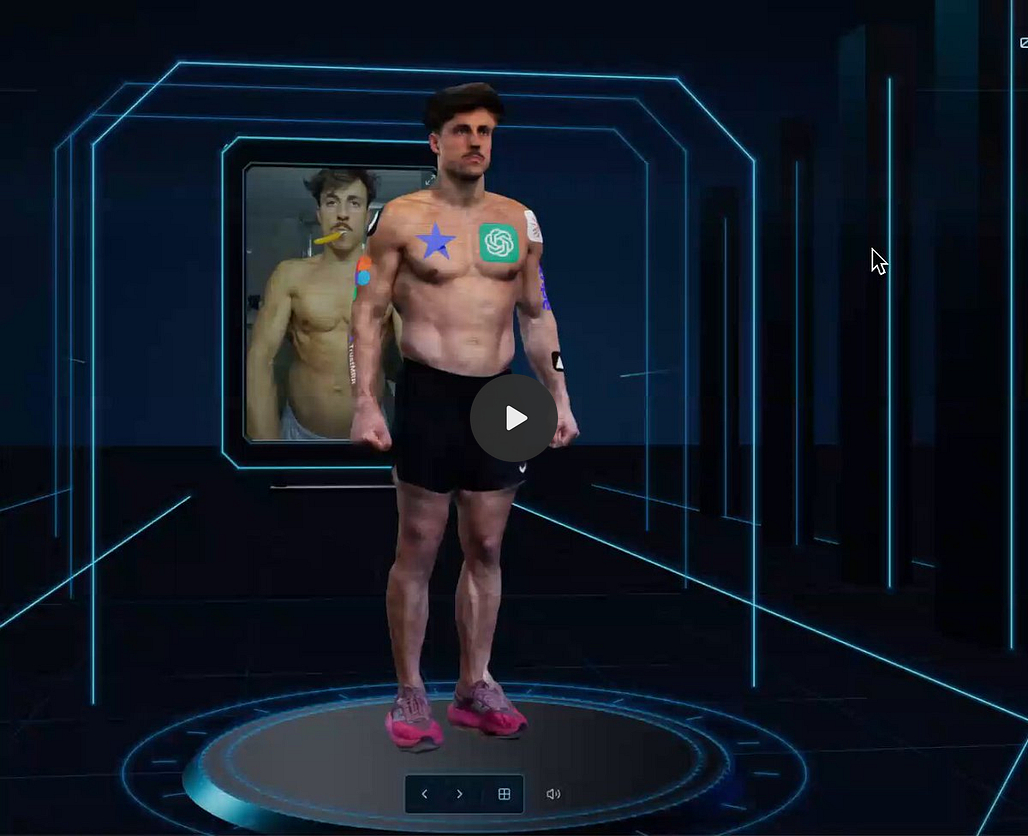
Think your toilet is personal? Try selling your body as ad space. Indie founder Marc Lou auctioned his body for his hyrox race: 15 spots, temporary tattoos, bidding from $1,000. it closed at $112,062 before he’d run a step. Ai video startup Higgsfield spent $68,000 across ten spots, and Stanley, from creator platform Stan, paid $20,000 for the glutes.

Or would you prefer your ad platform a little more silly? Dawson Gunn in connecticut taped “ur ad here” signs to the backs of his labradors, Stink and Bink. $20 a spot on Stink, $15 on Bink, who’s cheaper because she rolls over and wrecks the ads. booking.com bought in (”it’s a cheap trick, but dogs work,” said its head of social), then whatnot. So did a school board candidate, a job seeker and a teenager with a prom proposal. Gunn says he’s had “potentially over a thousand requests” and quit his bartending job.
This isn’t a new take. The million dollar homepage sold pixels at $1 each in 2005, and people were auctioning their foreheads on ebay the same year. What’s new is the scale, and how aware we all are. We’ve never been more fluent in how media gets into our lives. So people are pointing at the structures that advertise to them, half joking, and asking: why not pay me?
For a brand, buying in says you’re in on the joke, and you get what your audience actually watches. If silliness fits your tone of voice, that’s attention you wouldn’t see from an OOH campaign.
Why is this taking off now?
Two things at once:
Firstly for brands, we’re in the skip-ad era. As one adweek panel put it, brand-owned messaging “isn’t moving the needle in the same way”. So, we are at the peak of the attention economy, attention is rare and you have got to be different to be noticed.
And for creators, money’s tight. Greenawalt called himself unemployed. Gunn was bartending. Annie-mai was funding a trip. People are getting increasingly creative to sell the space they have because it’s the asset they have.
Selling out is actually more authentic
The most authentic thing you can be to an audience, is to be transparent and transactional. A sticker that says “This brand paid to be here” is more honest than an influencer pretending they weren’t.
It fits the wider trend of this year. Marketing dive’s h1 review found the best campaigns of 2026 “sold honesty”: like dove turning raw reddit reviews into ads. People feel deceived about a lot and trust in institutions is low, so brands that give them something to trust, connect. Even if its only trusting that they got the joke.
How to do this well.
For brand managers and marketeers, I think to buy into weird media placements well there are four steps to it.
Convince the team to have pre-determined budget to try a different media buy. This allows you to be reactive, to try the dog, the toilet, the forehead. Done right, it’ll have a better ROI than another web banner.
Integrate your teams, get rid of silos. Social, influencer and media teams need to work together, with proper social listening, so they spot these in time, and when someone suggests one, listen.
When your brand engages with this kind of joke, don’t mess with the format. These work because they’re absurd and funny and stop the scroll. Don’t try to overcomplicate the joke so it fits better. It’s stops being funny when it gets too prescriptive. Have you ever seen someone try to explain a joke?
Be brave early, the quicker you can get in on a joke the better it is for your brand. If you are 10th in line to get there it ends up giving diminishing returns. So, go for the weird stuff first, or lose out to faster, nimbler competitors.
SME’s usually get there first. Big brands follow once there’s a longer format or a clearer fit. Great news for challengers, and a nudge for the big guys: by the time sign-off comes back, the moment’s gone.
I believe that this is where attention is heading. A world where brands and ad space will thrive in many small, weird, surfaces instead of one big polished one.
Written by Eve Macdonald
Strategist at Kiss Branding
See our case studies here