


M&S food halls were the home of Percy Pigs and pensioners, where your granny went for a tin of the ‘nice shortbread’, but that was about it.
But, something changed.
It became cool. In the last few years M&S became one of the most popular, design-forward, and trend-attuned food retailers on the high street, and the younger demographic have noticed.
The average age of new M&S online customers has dropped by five years. In the last year alone, they gained 1.4 million new online shoppers, many of them under 35, and we’ve seen food sales grow by 8.7% year-on-year in 2024/25, with M&S reporting that this performance exceeded its own targets by around 20%.
Walk into any M&S Foodhall today and the tonal shift is clear. From the crisp aisle to the canned cocktail shelf, it’s fun, flavourful and future thinking. According to McKinsey ‘State of the Consumer 2025‘ Gen Z is willing to spend on lifestyle and “splurge-worthy” experiences, especially where product or packaging feel trend-assigned or premium.
M&S’ growth isn’t accidental. It’s the result of deliberate choices that show a clear understanding of what today’s shopper wants: accessible luxuries, attractive packaging, and small treats that make everyday moments feel special.
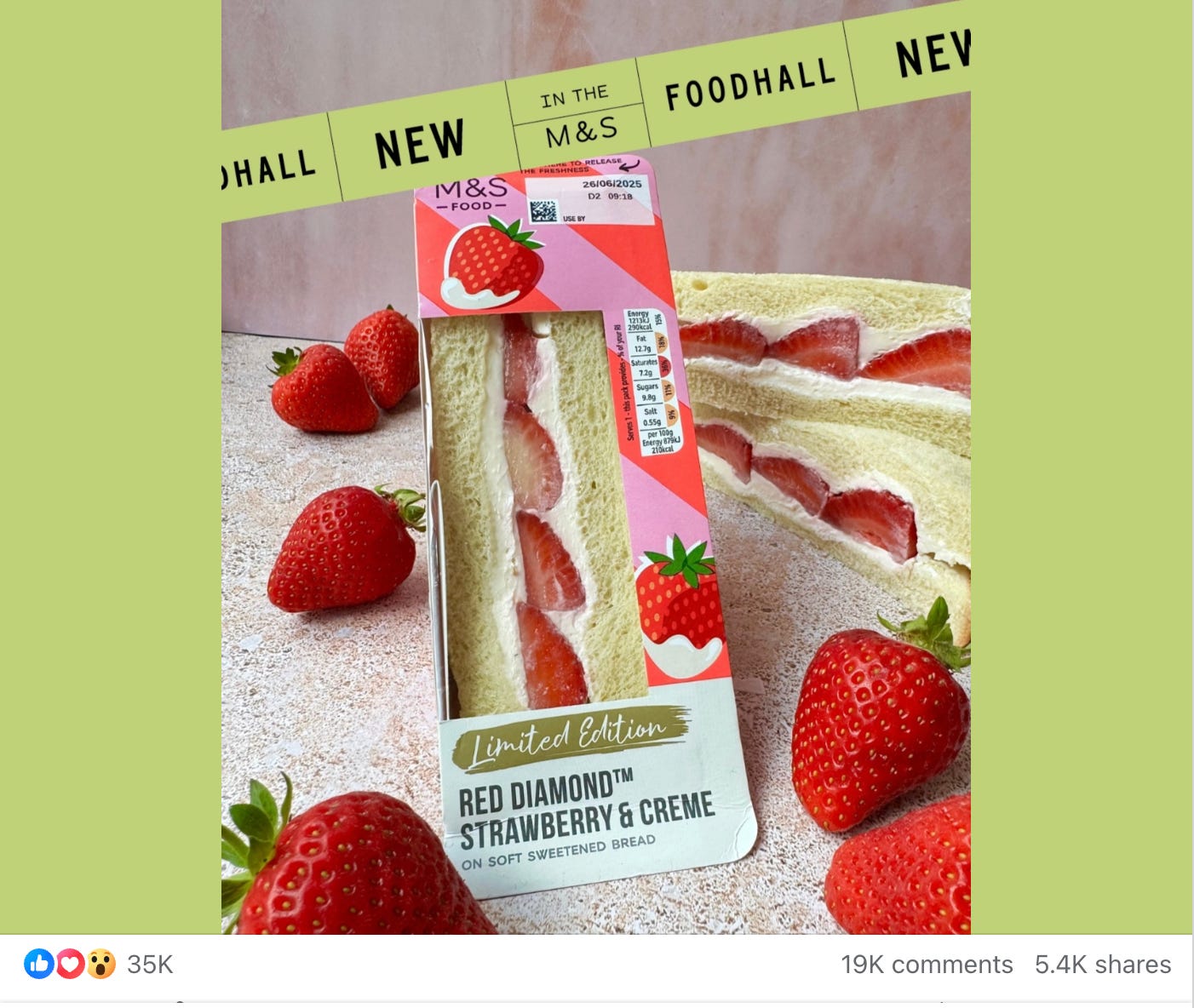
Let’s just give the M&S Strawberry & Creme Sandwich which went viral in Summer 2025. A limited-edition sweet treat inspired by Japanese fruit sandos, featuring sweet British strawberries, whipped cream cheese, and sweetened bread became a huge hit for picnics and summer snacks and set social media into a frenzy.
Another place where the change is obvious is the canned cocktail shelves. The range is a good example of how the brand is pushing product and design to reach multiple audiences without losing either one. The range spans several sub-categories: the core line with bold, foil-accented cans featuring cocktails like Mojitos and Cosmos, a secondary scenic, travel-inspired spritz collection including flavours like Hugo and Limoncello, and the Americana-style Marksologist line, which leans into vibrant, retro visuals. Each range has its own personality but remains clearly part of the M&S family, thanks to consistent brand marks, typography, and layout structures.
Interestingly, M&S offers low-and-no-alcohol versions of these cocktails, which taps into a youth consumer behaviour shift.
A growing number of Gen Z and millennial shoppers are cutting back on alcohol, with UK reports showing that around 21–23% of these age groups now purchase non-alcoholic alternatives regularly. By offering lower-ABV options alongside its original 8% cocktails, M&S has broadened its appeal without compromising on the fun or the finish. This taps into the sober-curious movement while still delivering on flavour and visual impact.


From a design perspective, the packaging flexes to reflect flavour trends and category shifts, whether that’s the warm, beachy tones of the spritzes or the reassuring traditional Victoriana of the core line, but it never strays too far from the feeling of “M&S quality.”
It’s a system built for variation and flex, not inconsistency.
It also reflects the brand’s wider ability to attract younger audiences while continuing to serve its older, loyal customer base. Rather than picking one lane, M&S has found a way to confidently straddle both.
M&S’s new crisp packets don’t hold back either. With punchy packets and funky characters and mascots, they’re designed to be snapped up, and posted, turning everyday products into free brand exposure. The packaging is bold, cheeky, and taps into that “little treat” mindset.


They’re perfect for picnics, as plus-ones to parties, or just a solo treat that feels a little bit luxe.
M&S’s success with younger consumers is the result of smart forecasting, data-led thinking, and a creative team that knows when it’s time for some visual courage.
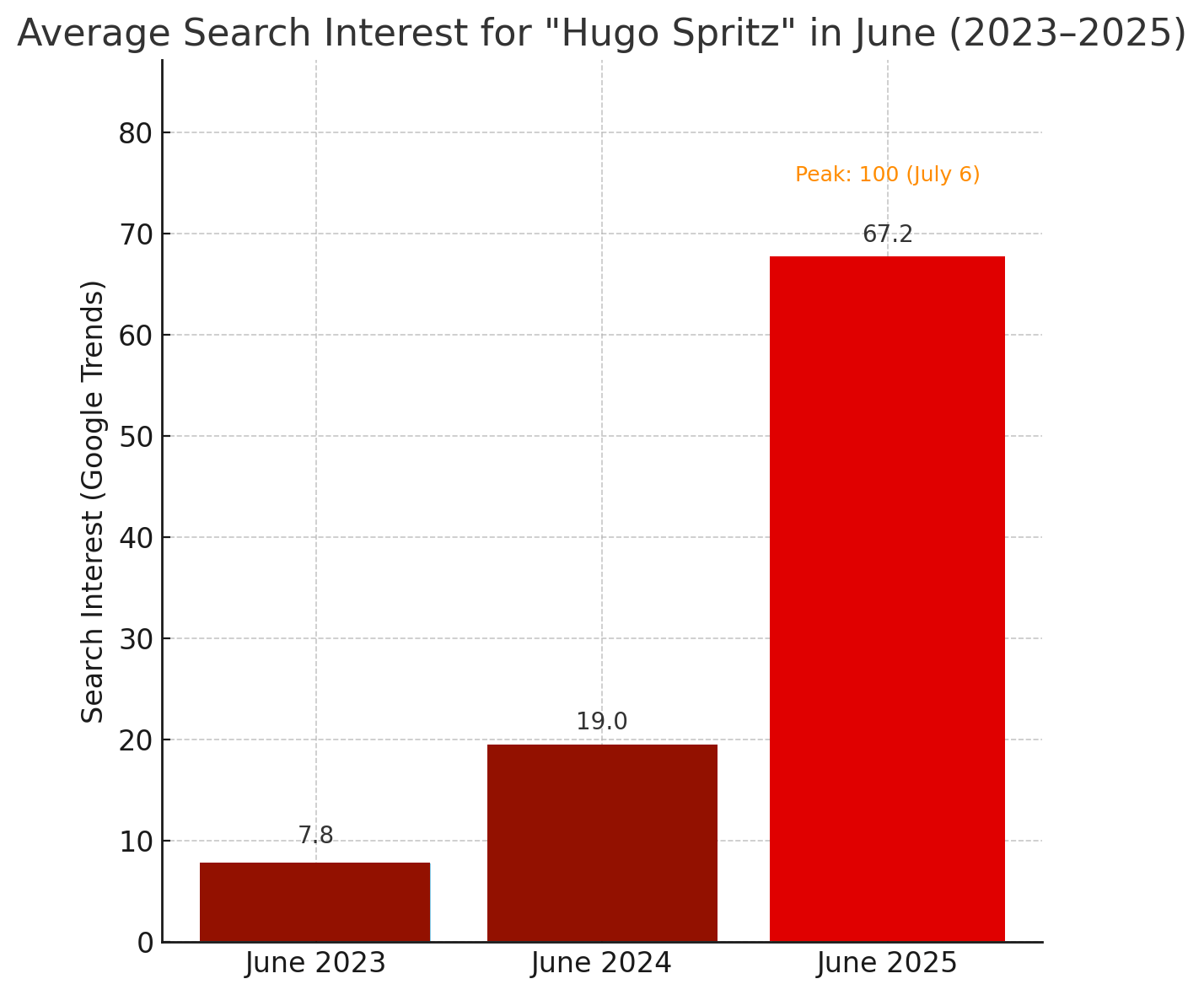
New launches like the Hugo Spritz show just how reactive their team is. In the last two years searches for a Hugo Spritz have risen 767.1%. They launched the new drink in June 2025 during the peak. They’re not following trends, they’re building product pipelines with real-time demand in mind. That kind of agility is rare in a legacy brand.
M&S also uses data from Sparks (its loyalty scheme) and online grocery trends to spot what’s working. As of 2025, M&S Food Marketing Director Sharry Cramond also oversees Sparks, signalling an intentional internal alignment between the loyalty platform and product/ marketing strategy teams. That strategy integration would mean the insights, and trend forecasting from Sparks data could directly shape decisions, including NPD.
Despite being a legacy retailer, M&S has built innovation systems that mirror faster, digitally native challengers.
Its Innovation Hub team explicitly focuses on disruptive food and drink concepts, speeding ideas from concept to shelf faster than traditional retail cycles. They’re paired with the Sparks platform to test and iterate rapidly.
This is a legacy retailer acting like a challenger brand.
By fusing real-time data with agile design systems and a brave creative culture, M&S has won youth loyalty to a high-street food brand in 2025.
For FMCG leaders, this proves the value of aligning trend data, flexible brand systems, and design-led thinking. This proves that it CAN be done. And isn’t just for the start ups out there.
The future belongs to those who can move fast without breaking brand trust.