

This Christmas, I noticed something odd.
Porsche, Hermès, Burberry, and Lacoste had all recently released animated campaigns. Not quick festive posts or trending Reels that week, but properly commissioned animated worlds, some even rolled out as a series.
What stuck with me was how they were animated.
They were distinctively not AI. They all had this really specific look to them. Hand-drawn, or at least hand-finished. That natural wobble and imperfection from frame to frame that traditional animation has. Considered colour choices. Composition that had been constructed, rather than spat out by a prompt.
No weird blending, no uncanny valley faces, no hyperrealistic perfection, no strange synthetic glow. This was human made.
Four luxury houses had consciously made the choice to commission beautiful, human-made animation work.
Amongst the AI campaigns this felt like a breath of fresh air.
Why now?
Well one of reasons those animations stuck with me so much is because of the massive backlash Coco-Cola experienced in November 2025. It was their worst ad yet. An AI slop Christmas commercial that became a watershed moment. People called it “soulless,” “cheap,” “devoid of creativity.” The kind of thing that makes you physically cringe when you see it pop up on your feed.

However, Pratik Thakar, Coke’s global VP of generative AI, doubled down. He said “the craftsmanship is ten times better.“
Audiences disagreed. Aggressively. Only 7.4% had positive sentiment about the ad. The rest was either neutral indifference or active disgust.
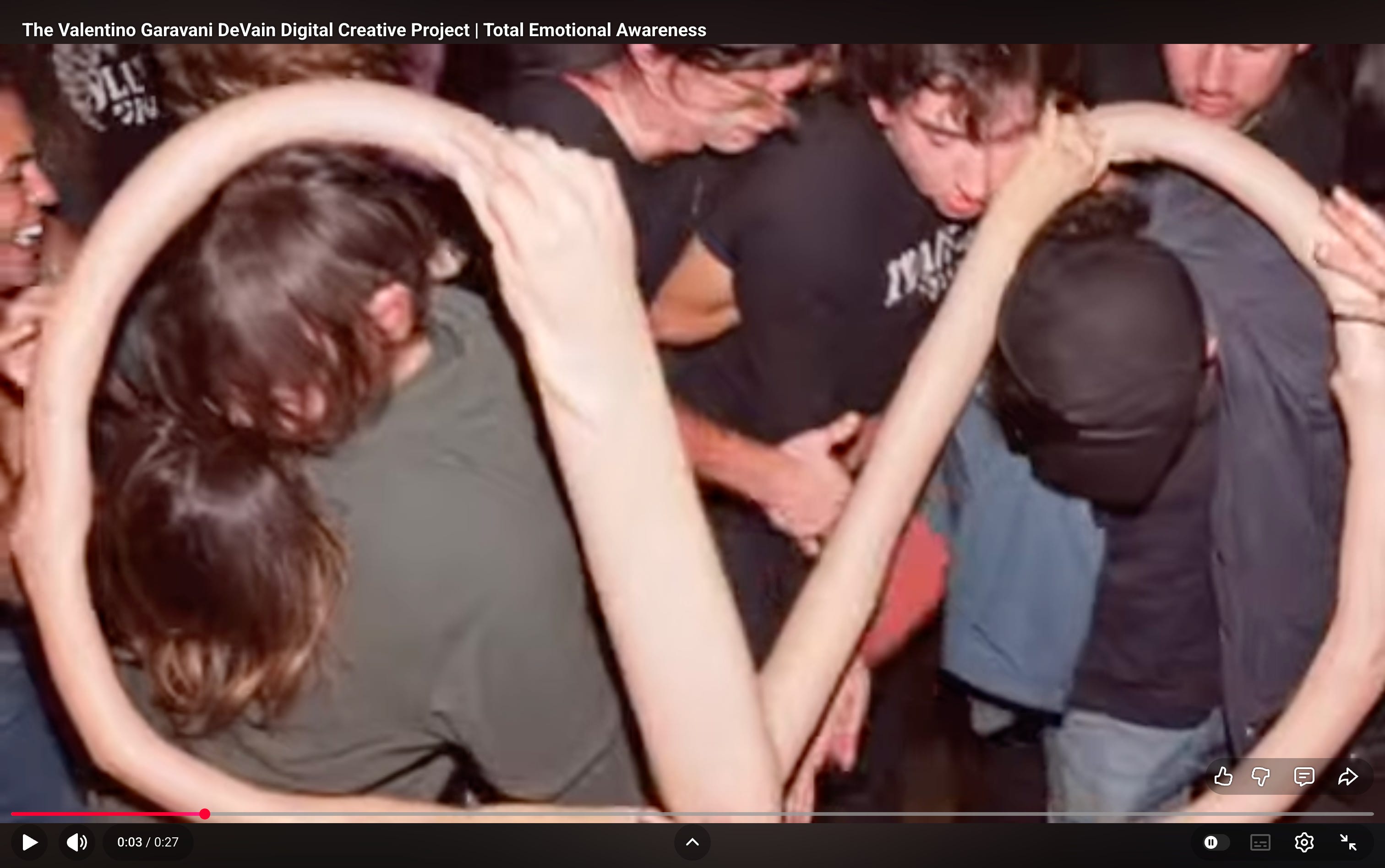
Then in December, Valentino launched what honestly should have stayed in the drafts. A horrific AI-generated handbag campaign where human arms blend into one another to become some Lovecraftian version of the Valentino logo. It was called “lazy” and “disturbing”, and this was despite being clearly labeled as AI-generated. Honesty didn’t save it. People just hated it.
Around the same time, “AI slop” entered mainstream vocabulary. It was Merriam-Webster’s word of the year for 2025. The term describes “slop”, as low-quality, mass-produced AI content which is flooding many platforms. As of December 2025 it was estimated that 21-33% of YouTube’s feed is now “AI slop” or “brain rot” content.
And there’s evidence it’s impacting brand. Studies have shown that AI disclosure actively hurts luxury brand perception. It “significantly reduces perceived brand essence” and leads to “negative consumer response”.
So is luxury completely rejecting AI?
We might think that the simple interpretation of this trend is that luxury brands are becoming anti-technology.
But that’s not what’s happening.
They are using it, just not where you can see it. Behind the scenes it’s likely running logistics, forecasting demand, optimising customer data. The boring, invisible work where efficiency helps.
But clearly what they are choosing to put in front of customers is a very deliberate choice to step away from AI.
Luxury Patrons to the Arts
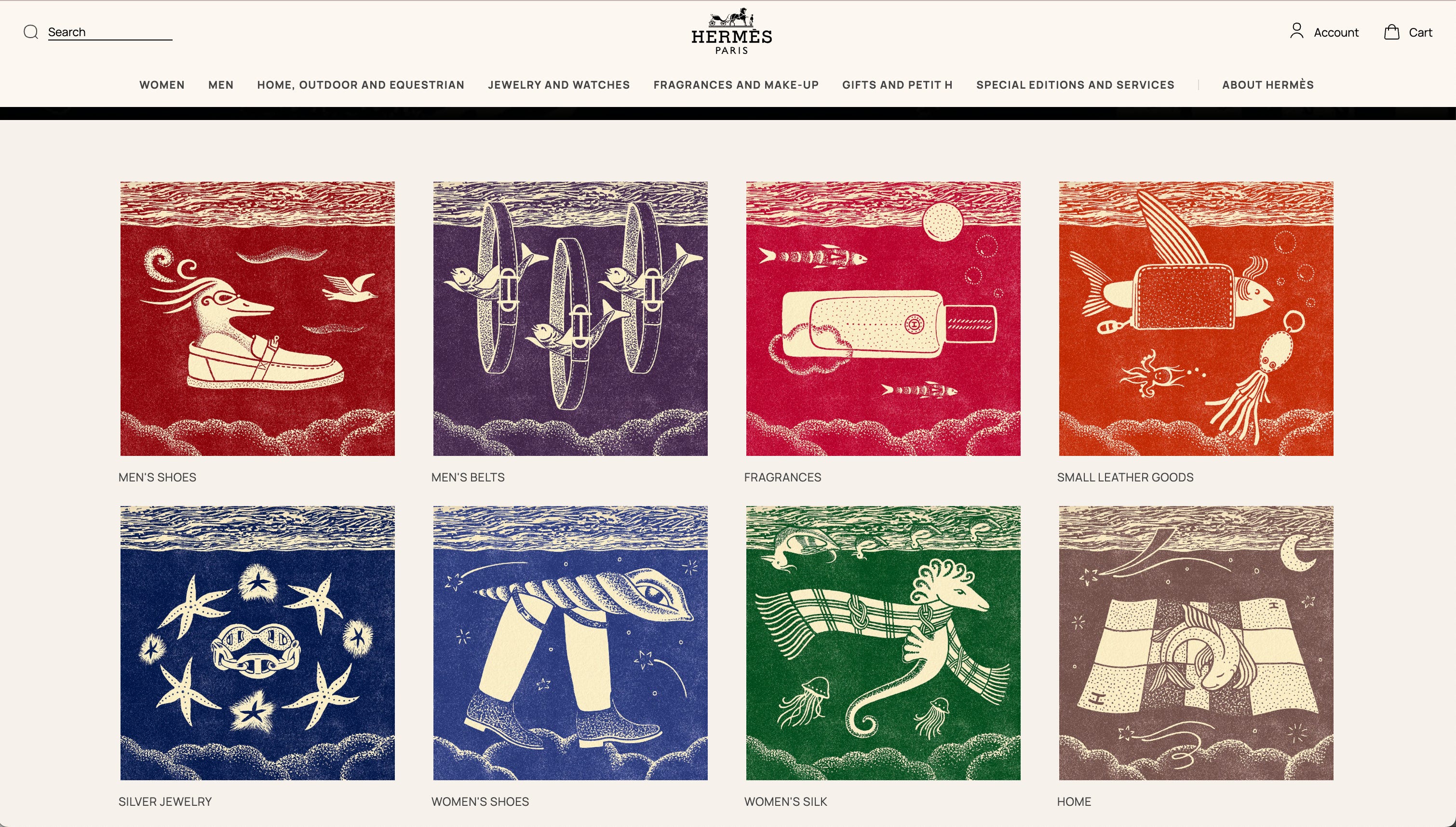
Hermès most visibly leant away from AI in their campaigns and collaborations. They’ve recently rebranded their entire website using beautiful hand-drawn illustration and animation, lino-print, crafted artistry. They’ve also worked with nearly 50 artists in 2025 for various campaigns and collaborations.
One artist who seems to be luxury’s favourite right now is Annie Choi. Her work has been described as “digital micro-installations,” and she’s worked with Loewe, Burberry, Dior, and Louis Vuitton. She told Highsnobiety, “The luxury sector in particular values the hand-drawn element because it aligns with their focus on craftsmanship. When you see their content, it’s about how they create their bags...They’re showing how the craftsmen do everything by hand, which takes a long time.”
Jonathan Anderson, who left Loewe in 2024 for Dior, once said, “Craft is the essence of Loewe. That’s where modernity lies, and it will always be relevant.” He noted that some of their highest-performing videos show people making something, people are deeply fascinated by the process itself.
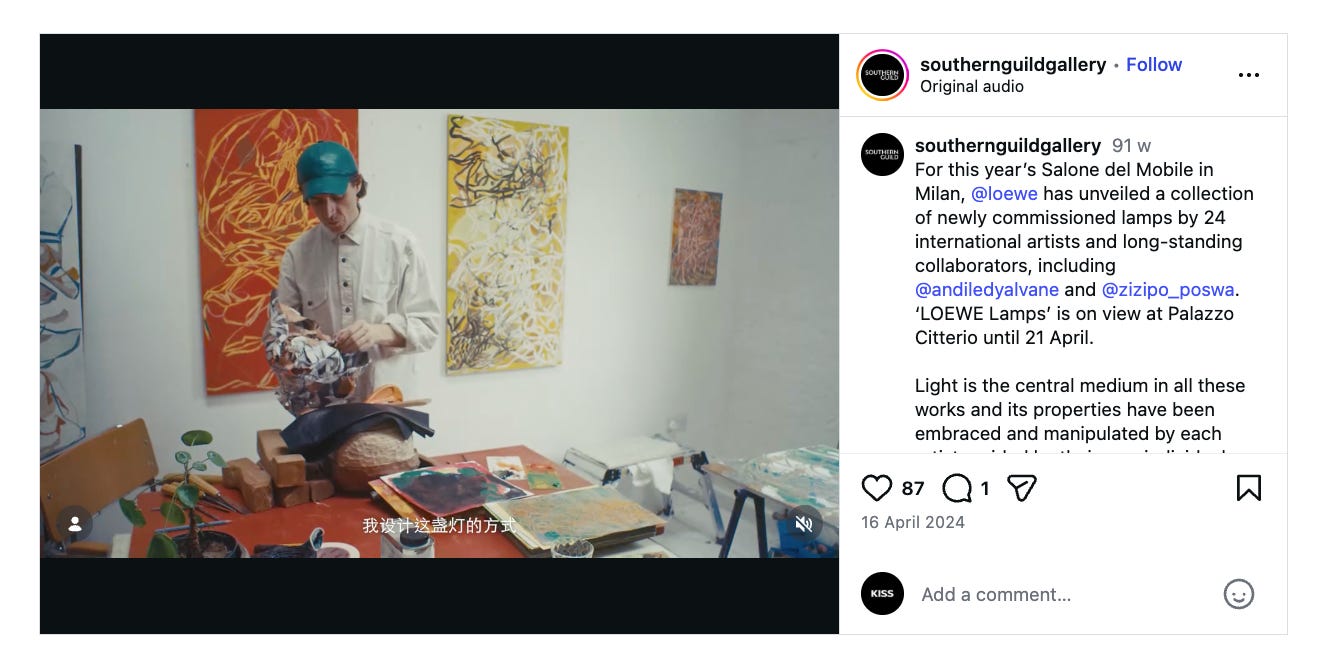
In 2016, they launched the Loewe Foundation Craft Prize, which awards nearly €50,000 to the winner. They received over 4,600 submissions for the 2024 edition, shortlisted 30 finalists, and then used those winners for projects like Loewe Lamps at Salone del Mobile. It’s basically an incubator for artists they can keep working with.
For their campaigns, they commissioned Annie Choi for the Loewe x Studio Ghibli collaboration (which she called a “dream project”) and anime-style ads for SS25. Nina Gantz from Blinkink studio was brought in on a Christmas campaign inspired by the Arts & Crafts Movement potter and tile designer, William De Morgan, and used a 250-person choir in Brighton for the bespoke soundtrack. Gantz said of working with them, “They appreciate you as a maker, as an artist...they understand that you have a voice.”
Then there’s Porsche, Burberry and Lacoste who’ve embraced the creative process fully. All three have shared beautiful behind-the-scenes footage between releases. Sketches, frames, work-in-progress. Artists credited and celebrated. All of this documentation reinforces that the work took time, people and money. Porsche’s film was especially celebrated for this. Even though it used 3D software to create the animation, it was still applauded for the quality and effort made by the studio.


In a time when artists are under pressure from AI, a positive that comes from this move is the solidarity of luxury and it’s support of contemporary arts. It’s giving creatives a lifeline and a platform to keep their skill set going. In 2025/2026 artists are reporting a big uptake in demand for live drawing events. Clients are actively seeking out human-made work. Luxury brands are driving a desire for artistry.
As New Wave Magazine put it “Giving artists a voice inside its atelier, the brand proves that they care about what they make, how it’s made, who makes it and how it’s told.”
Why is AI content off putting?
When everything is instantly generated, hand-made work suddenly gains a lot more value. But why does AI feel so viscerally off?
The theory of Uncanny Valley may have the answer. As human likeness rises, so does how much we like it, until something is nearly human. That’s when we hit the valley, a sharp drop into revulsion. Evolutionary alarm bells of distrust go off. Subtle imperfections in the human form read like actual disease, or even an unfriendly humanoid species. AI is ultimately not human, and for now, we can sense it.
Slow and Quality, or Fast and Cheap?
Coca-Cola’s CMO said their AI approach “cut production time” and that they’d normally “start a year in advance.” But it cost “basically the same” as traditional methods.
So it’s not about saving money. It’s about capacity and speed.
You might argue that startups have limited budgets to make impact or some mass brands work within tight margins so AI gives them a chance to market within their means. But personally, I struggle to see how any marketing campaign all made by AI will deliver. Something has to give. For Coca-Cola and their 2025 Christmas Ad, they damaged their brand perception.
Putting distrust and disappointment to one side, the use of AI also brings up questions around a brands reputation, particularly in younger generations who can (currently) spot AI. “If a brand can’t afford real models and photographers, are they in financial trouble?” or “Will their products be cheap if they’re cutting corners at the brand level?”.
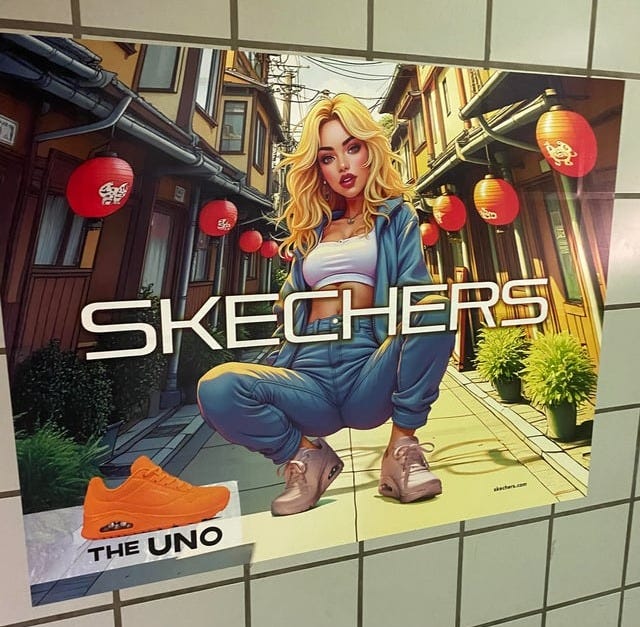
Skechers ran AI ads from hoarding to OOH. Various AI mistakes were visible and none of the ads made sense as a collection. The campaign unintentionally signalled low quality or low status through cheap-looking creative execution.
So what?
The use of hand created content is certainly creating point of difference for now. It’s a revealing one, about status, access and worth.
However “hand-drawn luxury animation” could become as codified and become it’s own cliché. There’s also the question of what happens when AI can convincingly mimic human imperfection?
Does luxury move to even more extreme craft signals? Live-streamed creation? Video verified human labour? Or maybe something we haven’t thought of yet?
But here’s what’s clear, luxury isn’t rejecting the future. It’s fencing off what still counts as exclusive.
And right now, the most exclusive materials are human attention and thinking, human labour and human time.
For now the patron is back. Human craft is once again expensive.
I love that you wrote about this. As we go so fastly into this ai era, we feel saturated and with the need of quite breeze. That why we want to go back to more traditional and simple things. And brands notice this.