

I got a David Lloyd membership recently. City hopping for work, needed somewhere to land on Fridays, and the pitch of fast wifi, a cold plunge, a sauna, a pool, and a fully stocked gym was too easy to say yes to.
However, I didn’t expect something in the co-working area. Technically it’s there for calls, in practice, it’s the most active flirting scene I’ve encountered since pre-pandemic pubs. Just lots of strangers starting conversations, lots of “I’ll see you in the sauna” between Teams calls and reformer pilates.
Now, you could chalk it up to being in Yorkshire, or that these are just people who can all afford a £300/month gym membership, or maybe, we are seeing luxury wellness spaces become our third place.*
What’s a Third Place (and why technically these aren’t one)
Ray Oldenburg coined the term in 1989. The third space is an informal social setting separate from your home ("first place") and workplace ("second place"). cafes, libraries, parks, and community clubs, but they need to have a low barrier to entry, somewhere the full cross-section of a community could afford to just be.
David Lloyd is £300 a month. Othership starts at £135. A drop-in at Arc will run you £49. These are not democratic third places, they are more like “fourth places”, a place with community function but paywalled access.
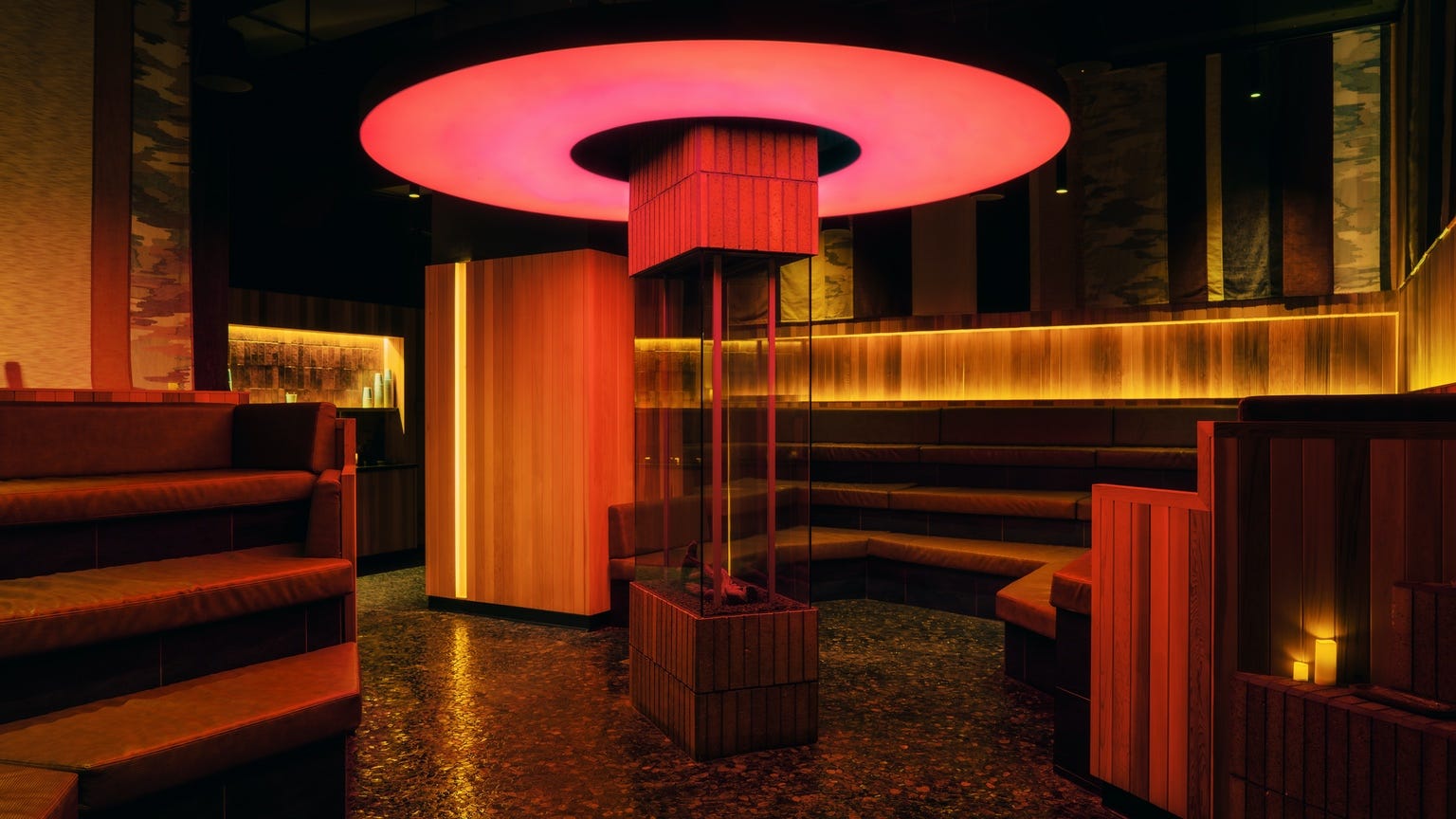
I would argue, though, that they are serving a similar function to a nightclub. You arrive, share an ordeal or a space, decompress with people who aren’t your colleagues or your housemates, and come back next week. Take Arc, buried underground at Crossrail Place in Canary Wharf, 5,000 square feet of contrast therapy built by an ex-Soho House director and a neuroscientist. They take participants through breathwork in the colosseum lounge, 93 degrees at the top of a sauna big enough to have its own temperature gradient, three minutes in an ice bath kept close to freezing, then back through to the lounge to decompress with your fellow survivors. Something about the pseudo-ordeal nature of it creates an instant, weirdly intimate, shared bond, and allows conversation to flow in a way that Londoners normally avoid at all costs. (Read The Nudge’s hilarious breakdown of it)
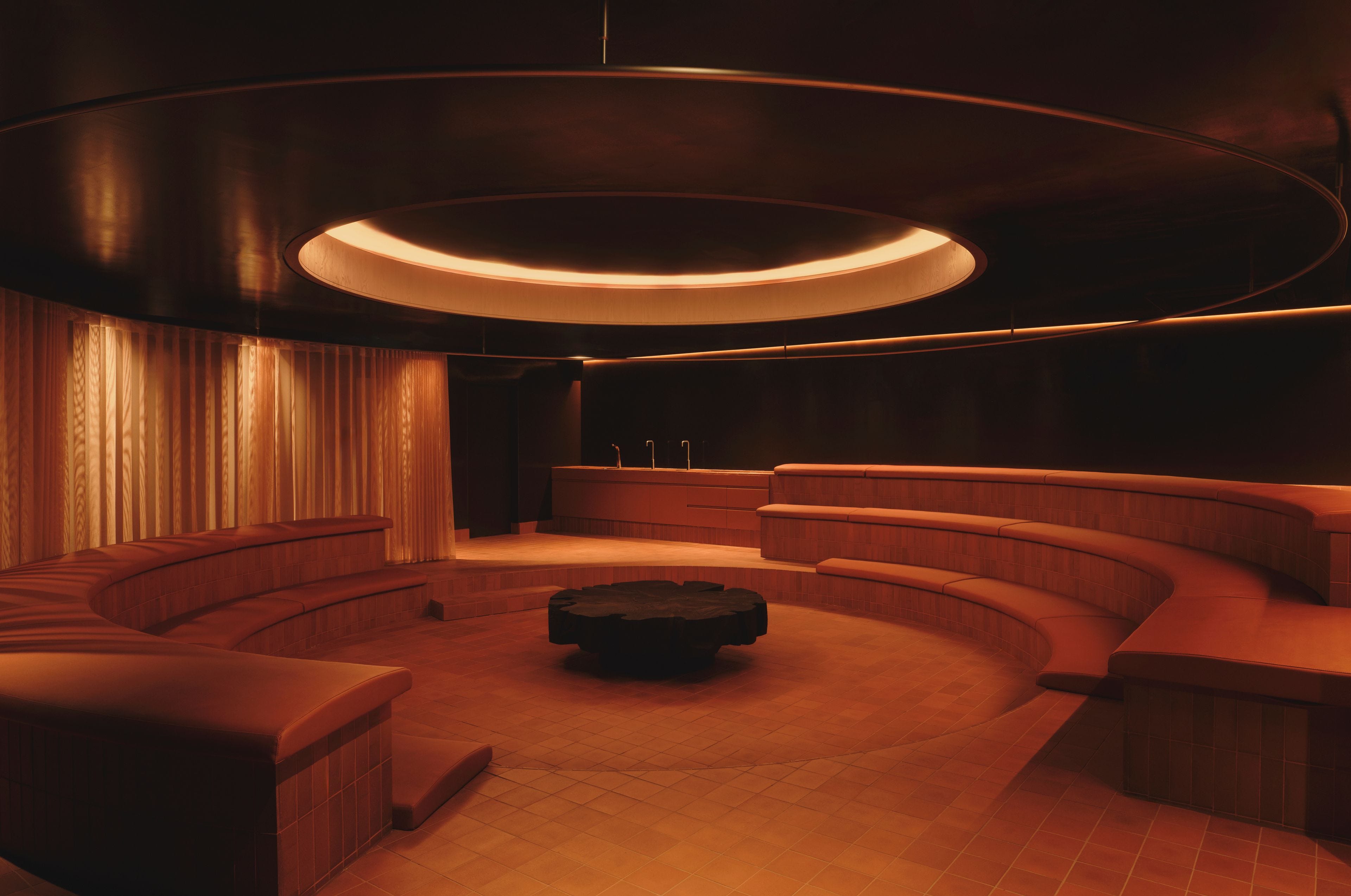
Similarly, The Sanctuary, a 40-person sauna in Shoreditch, houses an alcohol-free bar, dj sets and a co-working space all inside a Victorian textile mill, or Othership, which runs singles socials and sound immersion nights and DJ takeovers. All of these luxury wellness locations are layering in typical nightlife traditions to the rituals they offer, which facilitates community building, and it’s working. Bathhouse, which opened in Brooklyn in 2019, expects to hit $120 million in run rate revenue by end of 2026, and just closed a $35 million raise to fund a national rollout.
Why now, why Gen Z?
Gen Z is on track to be the most sober generation on record. Not helped by the fact that from 2009-2022 Britain went from ~54,000 registered pubs to under 40,000. Over 14,000 gone. Not only due to Gen z, but year after year of hits, like the beer duty escalator (scrapped 2013 after years of above-inflation hikes), the 2017 business rates revaluation, COVID, or the 2022 energy crisis. The economics of running a hospitality venue simply got worse and worse. What we’re seeing isn’t a boring generation going sober and staying home, but a generation with an enormous appetite to socialise, and a lack of traditional spaces to do so, that’s relocated where it’s spending its money.
The stats are pretty unambiguous about where the spend has gone. 51% of Gen Z say they’ve formed new friendships through working out or wellness activities. 44% exercise specifically to socialise, and nearly three-quarters say they exercise or participate in wellness at least twice a week, up from 62% in 2024. Community is now the primary reason nearly half of Gen Z stick with fitness and wellness.
There is definitely a status aspect to this, a Remedy Place membership card, a cold plunge photo, carry the same signalling as a bottle service table or the right label did ten years ago. Except you can’t fake biological output. You either sleep well, or you don’t. The flex is the discipline, and discipline signals mastery and time, which are rarer than just money.
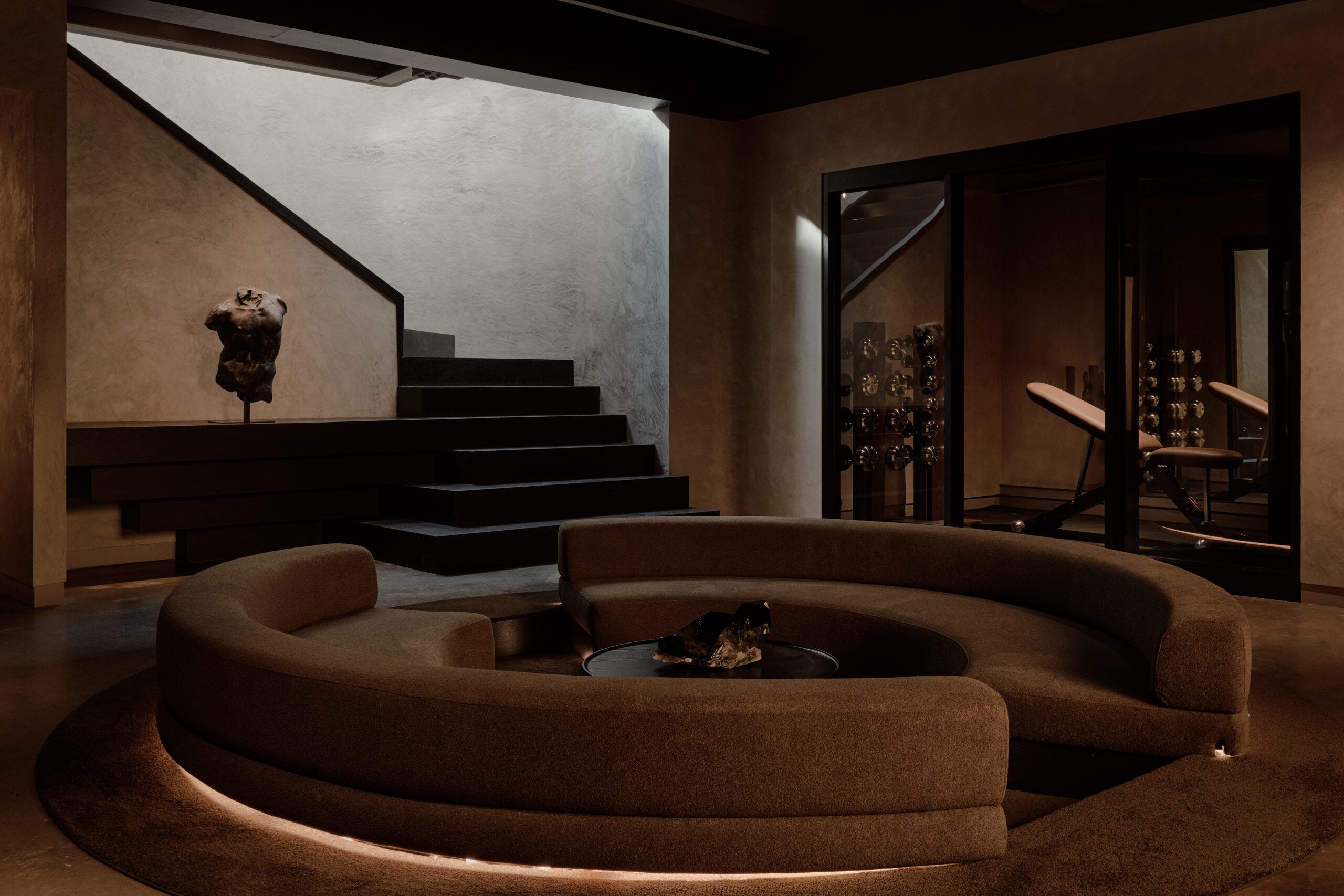
The gym and the nightclub have more in common than they look. A shared ritual, with strangers in proximity, and there’s a particular personal loosening that comes from physical exertion or shared vulnerability, you’re in a bathing suit, you’re uncomfortable, and the social armour is gone. The stripping back that happens in a cold plunge at 6°c is probably emotionally closer to a 3 am dance floor than it is to a spa day.
Additionally, there’s been a shift in how we track our bodies, and we can see how the wearable market has split into two distinct identities: quiet luxury and biohacking, but both benefit the wellness spaces. On one side, the Oura ring or Luma smart earrings, minimalist, tasteful, and discreet. On the other, Neuarable, Temple, or Muse S2, which show strain scores, EEG brain-activity sensing, earbuds tracking your VO2 max. All are counting steps, sleep scores, HRV, and many others. The self becomes a dashboard, and once the body is quantified, it becomes optimisable, and once it's optimisable, it becomes a project. This is arguably a pretty big shift in how this generation relates to their own bodies, analytically. You don't feel tired, you actually have a readiness score of 54 and a resting heart rate 12 beats above baseline. If you are hungover or don’t go to the gym for a week, it looks bad on your data. So, you skip the bar for the gym, because the tracker becomes the accountability mechanism that replaces social pressure to go out.


The format of the events are interesting too, most of the wellness events run 6pm to 9pm. You’re home before midnight, sleep is protected, tomorrow’s performance is intact. Same social function as a night out, calibrated for a generation that checks its recovery score in the morning.
Critically, I also think that this is a flight from their screens, a kind of digital fatigue. Cigna’s 2025 loneliness report found 67% of Gen Z feel lonely, despite being the most connected generation in history. Othership founder Harry Taylor put it plainly “There’s so much social media, which gives us the false perception that there’s social engagement and interaction. there’s a void in the wake of that social satiation that we all require as humans.” The move isn’t only away from alcohol and late nights, it’s also away from doomscrolling and toward something that actually registers in the body (and the trackers). The anti-doomscrolling-to-cold-plunge pipeline is very real.
The body as the last controllable thing
It would be easy to dismiss this as an obvious conclusion for a narcissistic generation obsessed with their image, but I also think that this is a ripple effect of an existential mindset.
In a moment of economic instability, collapsing institutional trust, war, ai-driven job anxiety, and a housing market that has effectively written off under-35s, the body is the final product left where your inputs reliably produce your outputs. You train consistently, you sleep better. You do the cold plunge regularly, your VO2 max improves. It’s easy to track on your Oura ring, and can see it working.
Equinox chairman Harvey Spevak said, “health is the new luxury.” While I agree, I think it runs deeper than aspiration, this is control-seeking behaviour. When you can’t touch the economy or the news cycle or your job security, you can control your body.
55% of Gen Z rank mental health as one of their top three reasons for exercising, up from 46% the year before. Not therapy, or mindfulness apps, but movement, presence, control of their body.
It is also worth mentioning that institutional faith, in healthcare, in government, in food systems, has regressed. The last time this happened at scale was the 1970s counterculture, which drove a generation toward holistic and body-led practices for the same reasons. The ancient practices at the centre of this revival (gua sha, oil pulling, ayurvedic principles, or the sweat lodge) have existed in other cultures for generations; people are now driving towards them as alternatives to the institutions that they now largely distrust.
So what?
What we’re seeing is a generation that’s relocated social infrastructure to the one place they can still exert control, their bodies. They’re quantifying it, optimising it, and using it to find a community.
The irony is that these spaces (Arc, Othership, Remedy Place, David Lloyd) are marketed as solitary pursuits. Performance. Optimisation. What’s actually happening in the sauna, the cold plunge, the reformer class, is the opposite. It’s connection, it’s belonging.
This is where brands need to shift, putting belonging as part of the brand is a real opportunity. Community architecture should be treated as an essential. Glo30 CEO Arleen Lambda put it best "We get to be witness to someone's life, their highs, their lows, their middles, and we are the constant. No matter what kind of day you had out there, this space belongs to you. People will know you, see you, appreciate you and be glad you're there." That quote is exactly why the spend in these spaces has increased, and why it will continue to grow. Everyone wants to feel like they are known, and they belong to an “in” group. The brands that build for that deliberately will have genuine growth opportunities.
Love this! Would love to connect! 🤍
The same concept is quietly underneath fandom, hobbyism, run clubs, and the craft revival too. When trust is lost in institutions, audiences will migrate to the things they can experience and build community around — particularly as a response to the digital age.