

A couple of years ago, every olive oil bottle looked the same. Dark green glass, some kind of crest, maybe, some swooping italic script promising you a Taste of the Mediterranean. Possibly an olive branch. Definitely a vague implication of heritage or at least that someone’s nonna had something to do with it.
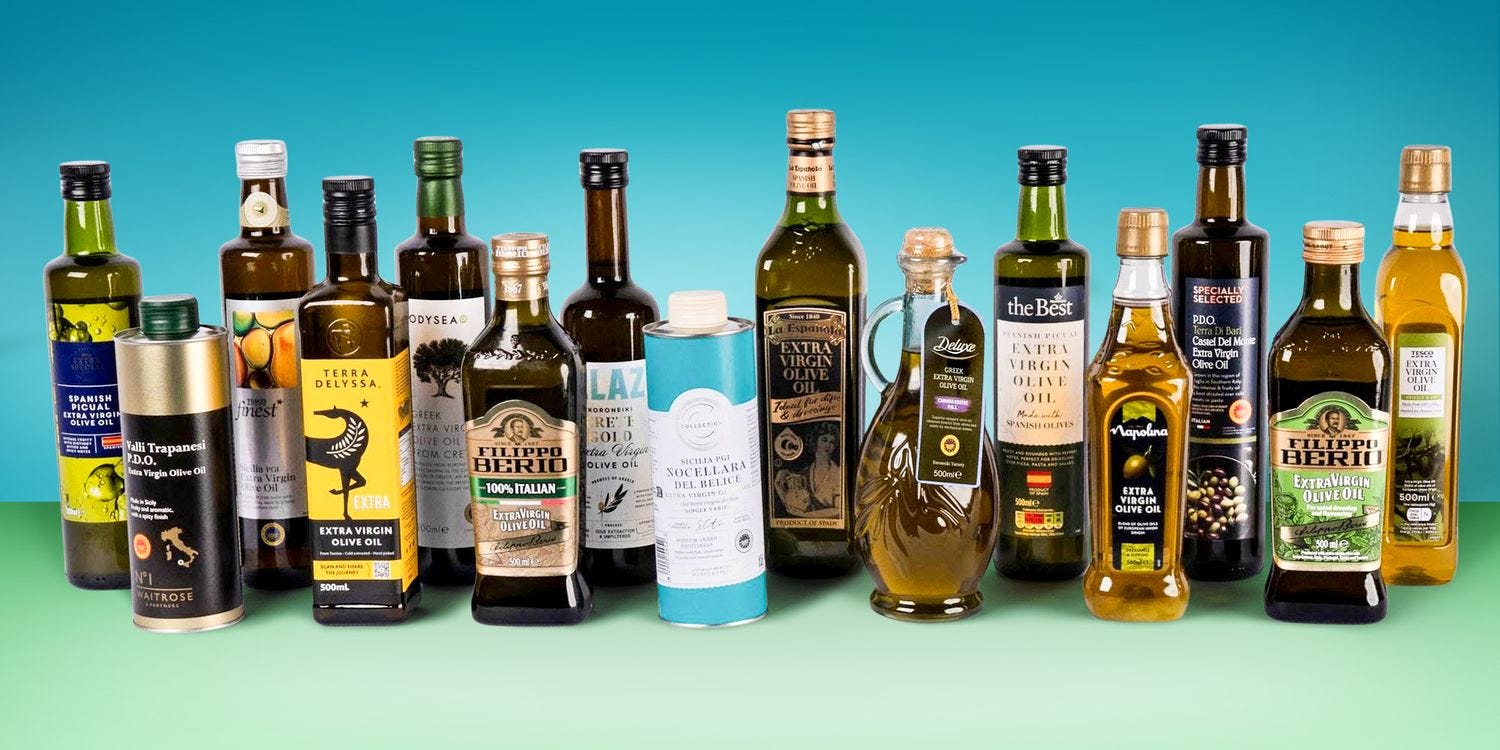
We all know the bottle. It has lived in the back of every middle-class kitchen cupboard since approximately 1988.
So what changed for Graza?
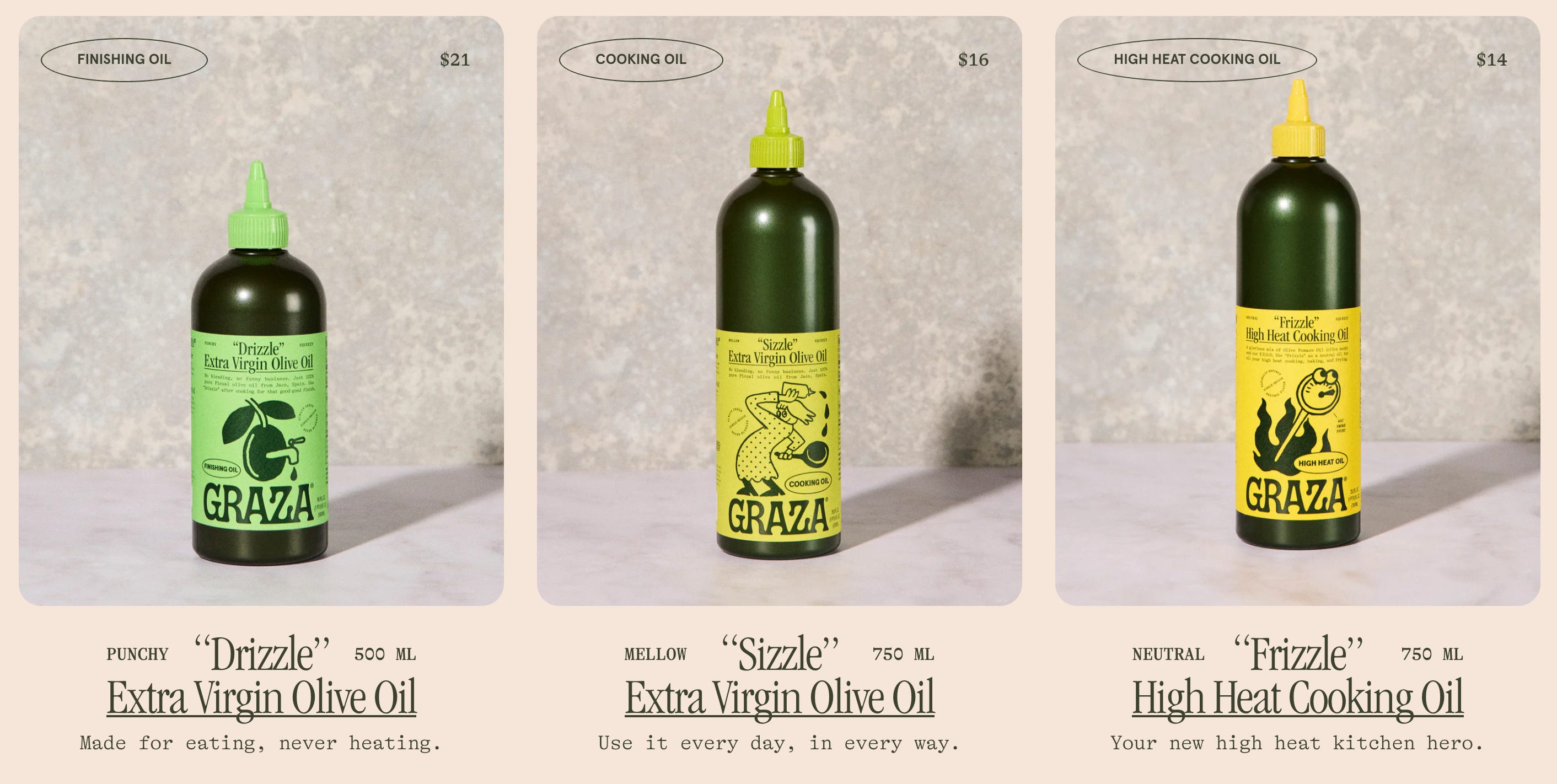
Graza launched in 2022, out of Brooklyn, the founder had travelled through Cadiz in Spain, tasted these incredible single-origin oils, and wanted to bring something back. He had a chef friend who told him, essentially, that the world did not need another small-batch artisan olive oil, there were already plenty of beautiful oils going unnoticed behind beautiful bottles in beautiful delis. What it needed was a format people would actually use.
So they put it in a squeeze bottle. ( As inspired by commercial kitchens, chef-style olive oil squeeze bottles are kitchen essentials that allow for precision drizzling, controlled portioning, and ultimately mess-free cooking, who doesn’t want that?)
Three SKUs: Drizzle, for finishing. Sizzle, for cooking. Frizzle for high heat cooking. The bottles are still the dark green ( light can oxidise the olive oil and make it go rancid), but are paired with joyful hand-drawn illustrations and a comic serif typeface, to create the kind of product that looks like it was designed by someone who has opinions about record sleeves and also makes very good pasta. It is, immediately and obviously, the olive oil of someone who cooks. Crucially, it was made to sit on your counter, you wouldn’t hide in a cupboard. It wants to be seen.
This is the shelfie era of food products. In the same way that Aesop became a status symbol on bathroom counters and Le Labo made people leave their fragrance out on purpose, Graza made olive oil into a counter object. An item that communicates your cultural taste before you’ve cooked a single thing. It travels well too, as at home in Brooklyn as it is in Soho. It looks great on screen too, this is a product that is made to be photographed.
By late 2025, Graza represented 24% of total olive oil category growth in the US.
The squeeze bottle format is firmly in the UK, with a few lookalike brands popping up too.
Good Phats picked it up. Metabolic health positioning, polyphenol content front and centre. Doing the same thing Graza did but in the functional health corner of the category.
Glug is in there too. Squeezy bottle, hand-drawn characters, playful naive illustration style, a sort of sun-bleached, slightly goofy version of the same visual language.
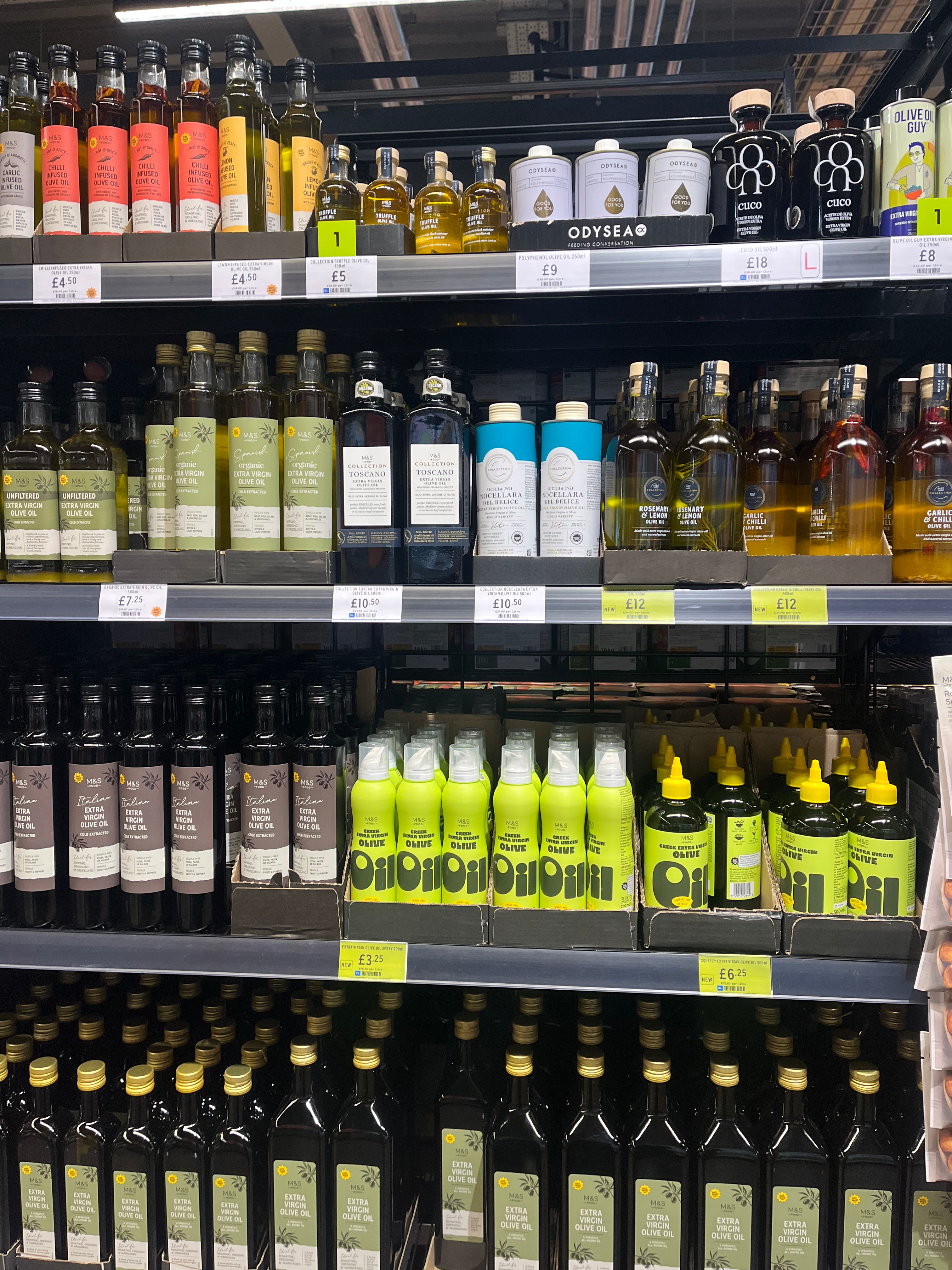
M&S also launched squeezy bottles this year. One for olive oil, one for avocado oil. Which is both a kind of compliment to Graza and sign that the format is no longer a differentiator.


Here’s the thing about a brand signal that can be copied, eventually, the mainstream notices, and the moment M&S does it, this can’t be your key differentiator any longer, otherwise, consumers are just buying a format of olive oil.
However, in the case of Graza, and why it still works, the squeeze bottle was never really about packaging. It came out of a conversation with a chef about how people use olive oil in real kitchens. That one insight, design for the behaviour, not the category convention, did the positioning. By making it look like how it was going to be used, it defined who this product was for, how they cooked, what their kitchen looked like, what they cared about.
The other smart part of their brand strategy is they split the range by use-case: Sizzle for cooking, Drizzle for finishing, and now Frizzle for high heat. Three different use moments. Three specifically different jobs, named accordingly. Historically, not so clearly stated.
Which makes what M&S have done rather revealing. Their avocado oil says squeeze and drizzle. Their olive oil says squeeze and sizzle. They’ve borrowed the bottle, and they’ve borrowed the verbs. The behavioural language Graza invented to describe two distinct moments in cooking has been absorbed into a supermarket own-brand descriptor. Which is either the sincerest form of flattery, or a sign that a brand idea has been thoroughly digested by the mainstream.
The brands that follow don’t necessarily have that insight, if all they can copy is the bottle, thats ok. A bottle without the idea behind it is just a bottle.
When M&S does it, it’s confirmation the format has moved from cultural shorthand to category default. Which means maybe in a few years the next interesting thing in olive oil probably involves a very beautiful, very serious glass bottle that looks like nothing else on the shelf. For the moment though, it certainly stands out on shelf.
The question for anyone brand building right now: what’s your squeeze bottle? What packaging decision are you making that feels functional but is actually doing far more of your positioning work? Are you making it consciously, or are you just copying the bottle?