


This weekend I was a bridesmaid at a wedding for a friend. Guests flew in from Madagascar to Lancashire. “I went to an international school,” the bride said, by way of explaining the guest list, as if that covered it.
What actually struck me was that in the slow moments, half the wedding had sat down to play cards. Not just cards, either, a backgammon board appeared from someone’s hand luggage, and a majong set was produced. It was amazing, it was such an icebreaker. Strangers who’d never met sat down and just chatted. Same rules (mostly, some international variants), same shorthand, same instinct for when to talk trash. In a room full of people with little particularly obvious in common, a game did heavy lifting.
I’ve been chewing on why that happened, and it turns out I’m not the only one clocking it. There’s a tactile renaissance going on, and if you’re a brand not paying attention to it, you’re missing free real estate.
Logging off, showing up
Zoom out, and there are basically two cultural moods running in parallel right now: everyone wants to log off, and everyone wants to feel like they are part of a community. Sauna culture, padel clubs, and analogue tabletop games are all doing the same kind of thing, replacing the loud, screen-lit, over-photographed nightclubs with something lower pressure and fully present.
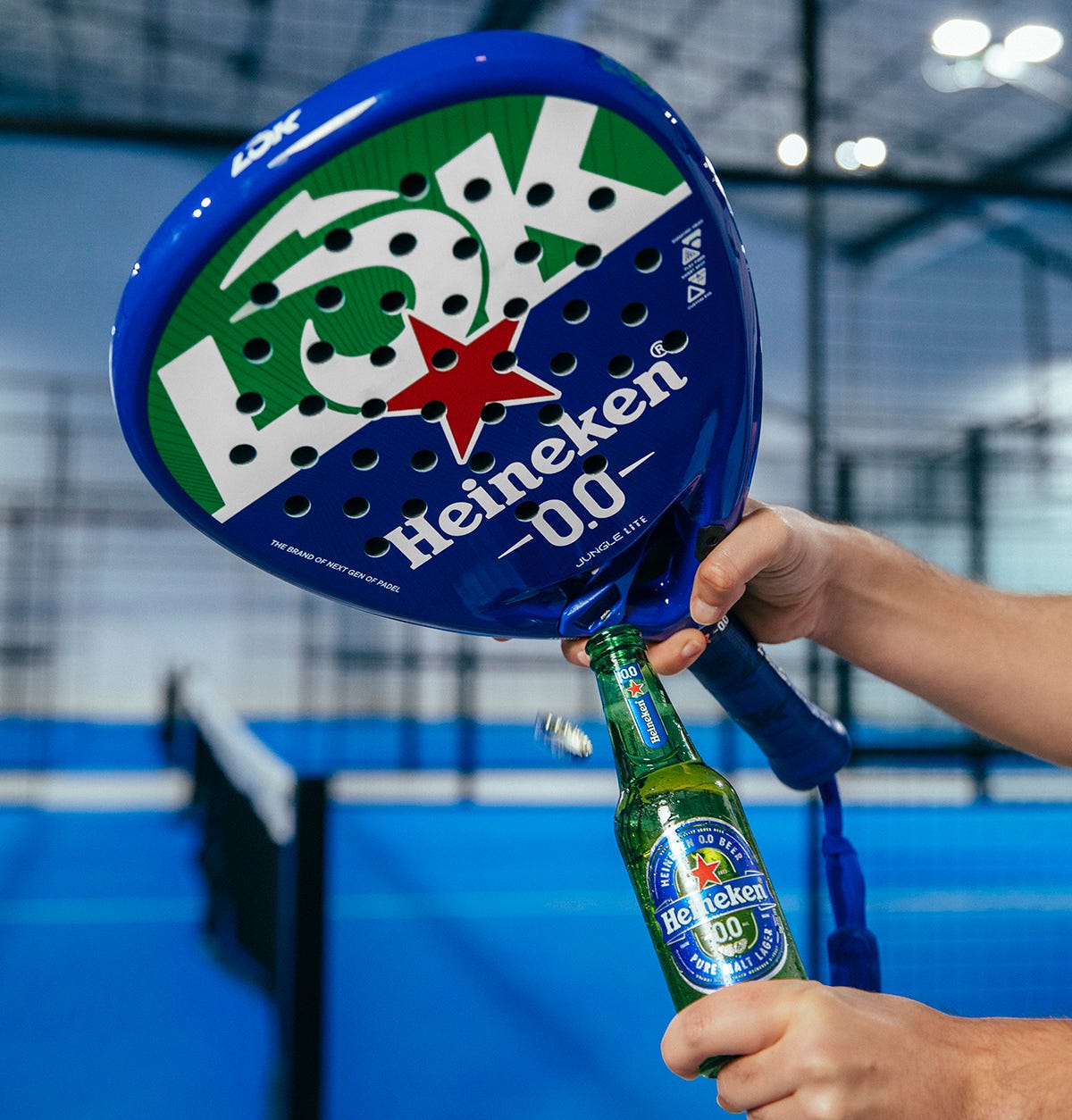
Padel is the clearest example. Courts are now clustering next to coffee shops and boutique gyms the way Pret used to cluster next to banks. Heineken 0.0 partnered with Premier Padel specifically to buy into their “social DNA“, they said: “For Heineken® 0.0, joining the world of padel is about more than the matches on the court, it’s about the community that surrounds it and staying connected with today’s evolving lifestyle needs.”
Recently, I wrote about how saunas and wellness spaces have the same kind of desirability, cashing in on the actual radical act of trading screen time for steam time.
The concept I am keen to discuss today are the games. New York is the clearest proof of concept. Green Tile Social Club has built a mahjong scene tight enough that people now turn up solo just to get a seat at the table, attendance reportedly doubled in a few months. Across town, 7 Spring is doing the same for backgammon, a members’ club built entirely around the board, not the bar. I won’t lie, the modern, stylish branding of both of these is a contributing factor to their growth, but that paired with the analogue cultural current they have become winners in the city's social scene.

Back home, H&M Home’s backgammon set with Palm Heights sold out within hours. Addison Ross launched a whole range. No longer niche, very much a coffee table requirement.


Why these games?
Part of it is just how tactile they are. Polished wood, the clack of ceramic tiles, the rattle of dice in a cup, it’s sensory in a way scrolling could never be. We have been craving touch, and this is the perfect solution to it.
Part of it is the social engineering. These games have fast rounds and a low barrier to entry, you don’t need The Queens Gambit levels of strategy to play a hand, which makes the games act as icebreakers. There is a slight status layer underneath, like if you already know how to play, if you’ve got the etiquette down, that’s a flex, but a subtle one. It’s not about how much you’ve spent, it’s about what you know. That’s the common thread we have been finding, luxury has stopped being about spend and started being about cultural fluency, if you know, you know.
So why these and not chess, for example? It had its own revival, thank you, Queen’s Gambit, but that one peaked back in 2020/21 and it’s fundamentally a solitary, cerebral thing, one v one, brain versus brain. This wave is different, it’s collective and social. It only works if there’s a room full of people.
Slightly ironically for a trend built on “logging off”, these games are extremely photogenic. Graphic tiles, colour-blocked boards, they’re built to perform online, which means every “look how offline I am” photo is also perfect for the feed.
I think it would be a disservice to ignore how 2026 does feel like something of a “Chinamaxxing” moment, the jokes about “you’ve met me at a very Chinese time in my life” aren’t coming from nowhere, and mahjong’s rise sits inside a bigger wave of Western interest in Chinese aesthetics, from Mandarin collars on the runway to the rise of guochao. I think, to be honest, that there’s real cultural tension with the rise of these games and it’s worth asking, who’s running these clubs, who’s profiting from $15,000 “heritage” sets, and whether this is cultural appreciation or something closer to appropriation?


What’s next
It’s not just the East Asian games getting the attention, Dishoom’s sister venue, Permit Room, has run carrom nights, pulling a game from the Indian diaspora and putting it on the table for anyone who fancies learning.
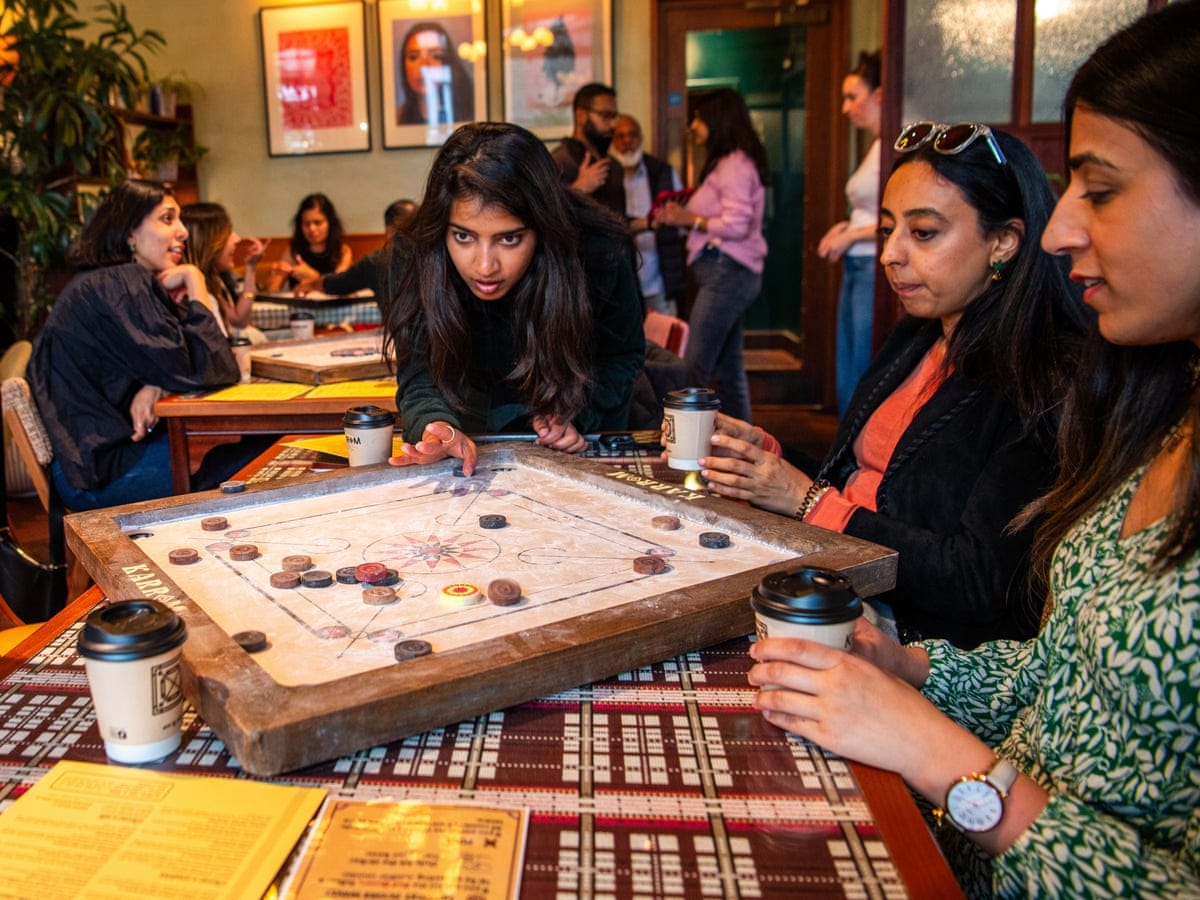
If carrom follows the same trajectory mahjong just did, a diaspora ritual, a third-space activation, aesthetic discovery, brand adoption, I’d call it the next one to watch. Dishoom’s already there. The rest of us are catching up.
Make it playable
There’s a change happening in what the experience of luxury even means. It used to be about the aesthetic and a label, now it’s more about craftsmanship, scarcity, and tactile materiality over logos. Games slot straight into that. If you know how to play, you’re in the club. The actual luxury is having the time to sit down and use it.
Which is the whole point for brands, really. Invitation beats advertisement. Get people into a room to play, a kiosk, a café, a Tuesday night carrom table, and you’re not interrupting their day with an advert, you’re giving them a reason to want to be part of your world. They came for the game. They’ll stay for the community and brand.
So maybe the real opportunity for brands is how they can use a table, a set, and an open seat.
Do we think the rise of adults buying LEGO sets is also part of this? While it might feel like a solitary pastime, many people are getting together to build these days - so while not necessarily a game, it’s still a real thing in your hand while having something to display your ‘offlineness’ afterward
Do we think the rise of adults buying LEGO sets is also part of this? While it might feel like a solitary pastime, many people are getting together to build these days - so while not necessarily a game, it’s still a real thing in your hand while having something to display your ‘offlineness’ afterward