

It’s the first sunny bank holiday weekend and obviously, I end up in a beer garden. The thing I can’t stop thinking about, every cool girl there was drinking a Guinness.


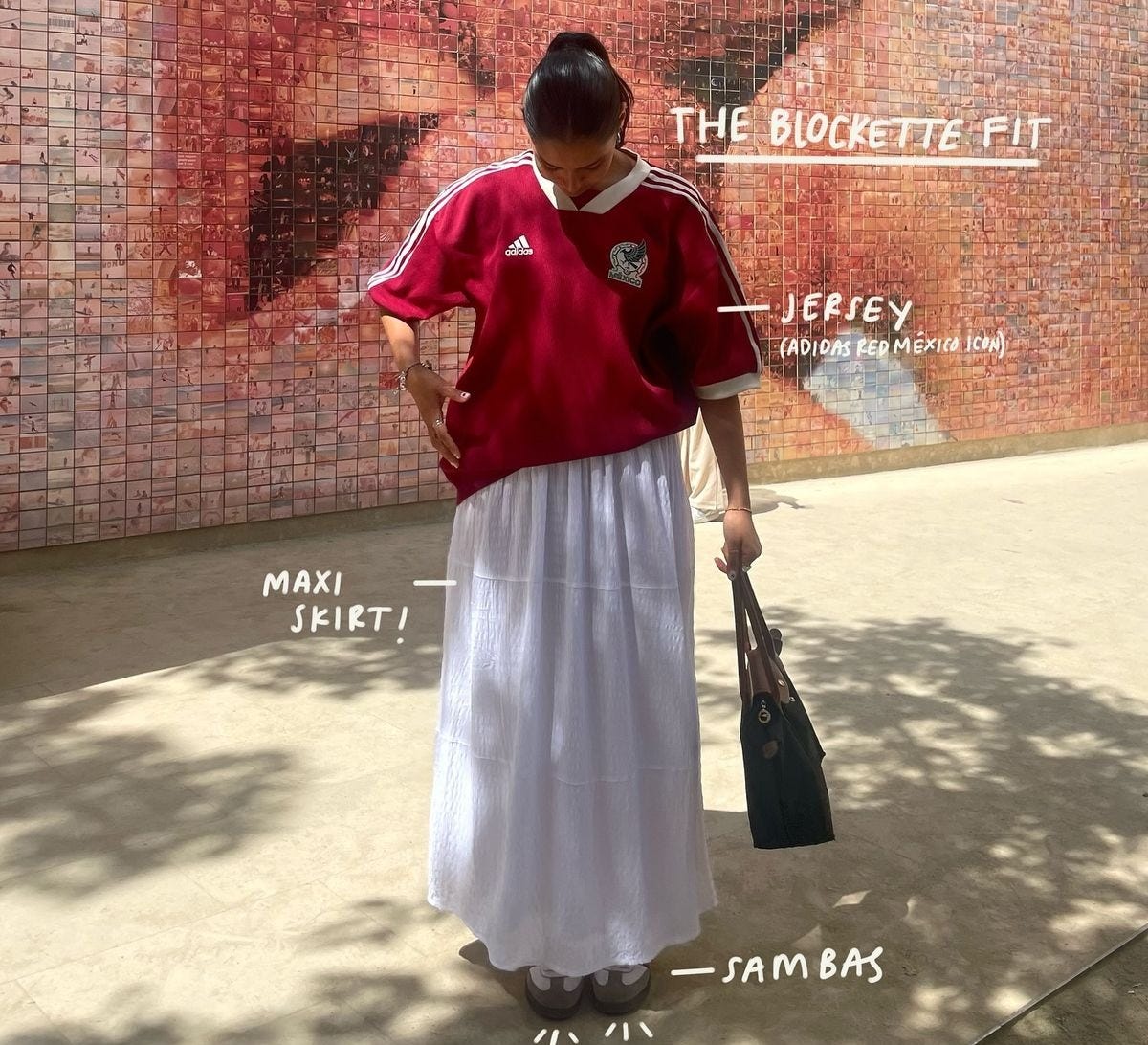
Leather bombers. Long trenches. Slim sunglasses. Chunky knits. Guinness.
Girls who two years ago would have had an Aperol Spritz or a G&T without a second thought, were drinking the masculine, Irish, rugby-adjacent Guinness. The one your dad drinks. That one.
So why is the dark stuff suddenly the drink of choice for young women in the UK?
The numbers are staggering. Penetration among women is up 86% in two years. “Cool” perception of the brand among 18-24s tripled, from 22% to 67% between 2023 and 2025. One in nine pints poured in the UK is now a Guinness. This is a cultural landslide.
We could attribute this to Kim Kardashian posting a photo or Olivia Rodrigo wearing a “Guinness is Good 4 U” shirt at her Dublin show. I think the causation runs the other way, the celebrities were tapping into a moment that was already well underway. Splitting the G was spreading across TikTok before any of that. #guinness hit 161.2K posts. The misspelt #guiness hit 41.2K.


I think there are two drivers for this.
The first is blokette/laddette culture. There’s a strain of feminist counter-culture running through Gen Z right now that’s essentially about bucking the drink you’re supposed to order. Ordering a pint instead of a G&T is a small act of identity. TikTok comment sections saying “that girl energy, Guinness has always been that girl, the girls who get it get it ” are really driving that it’s about who you are when you walk to the bar.
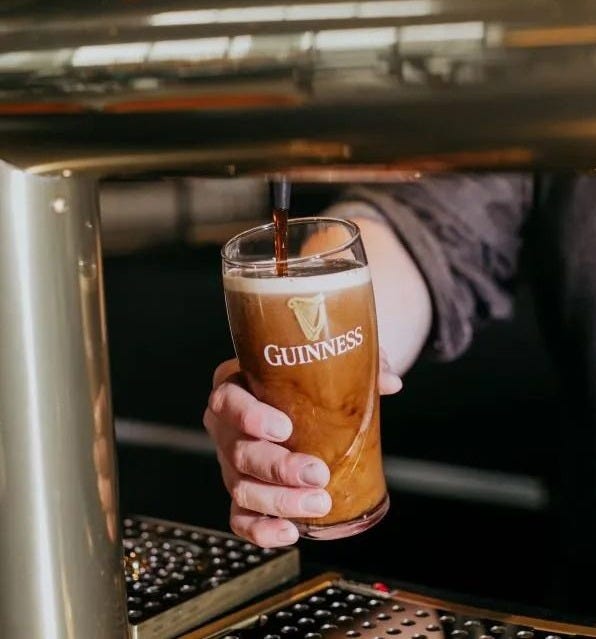
The theatre of the pour helps here too. The surge and settle is closer to watching a cocktail being mixed tableside than a pint being pulled. The drink itself translates well to the screen, and is easily recognisable on the feed, because let's be honest, a Guinness is a good-looking pint. The deep, near-black body, the thick creamy head, the iconic tulip glass. It photographs beautifully. It looks deliberate and considered sitting on a table, which is more than can be said for a pint of lager. In a world where everything ends up on a story, a Guinness being poured is content. A Guinness on the table is an aesthetic. A pint of Carling is neither.
The drink earned its place in the visual language of a pub night out, and once it's in that visual language, it becomes part of the look.
The second thing is Irish cultural soft power, and Britain is deep in it right now. Grian Chatten. Paul Mescal in his GAA shorts. Andrew Scott. Fontaines DC. Kneecap. Say Nothing. House of Guinness on Netflix. Something shifted in the cultural weather and suddenly Ireland, its actors, its music, its accent, its attitude, has become the thing Britain can’t get enough of. Not the traditional, Lord of the Dance, leprechaun, and limericks version, but the real, modern, cool one.


What that has created is tribalism with an easy identifier. An in-group signal that costs £6.50 and comes with a two-minute wait. When a group of girls all order Guinness at the bar, they’re choosing a tribe. Showing they’re culturally fluent.
So why Guinness and not any other heritage beer?
Boddingtons have heritage. London Pride have heritage. Tetley’s have heritage. None of them are anywhere near this moment. So what does Guinness have that they don’t?
The historic ritual.
No other beer in the world has such specific rules applied to its pour. The two-part pull. The surge. The settle. The waiting. The precise angle of the glass. The creamy head that has to be just so. The splitting of the G. Other largers don’t have a way to tie the current to the past in the same way. They have heritage, but history without ritual is just age. So, when a TikTok trend, a celebrity moment, or a ‘blokette’ movement comes looking for somewhere to land, it finds real pre-existing culture to tap into, because Guinness has age and a ceremony.
From a brand strategy perspective, it’s an example of sometimes we get it backwards. We assume the brand leads and culture follows, that you target an audience, craft a message, pull people towards you. Guinness in 2026 shows us that sometimes culture moves first, and the only question is whether your brand has enough truth for the audience to grab onto.
The takeaway for brands, and the conversation agencies should be having with their clients far more honestly, is this: stop asking what culture you can attach yourself to and start asking what culture you actually have. What is genuinely, specifically, irreducibly yours? What does your brand do that nobody else does? What ritual, what language, what visual, what behaviour has accumulated around you over time that you could hand to a new audience and have them immediately understand?
Most brands spend enormous energy chasing culture, pivoting to new audiences, and manufacturing moments of relevance. Guinness did the long, unglamorous work of being consistently itself for two and a half centuries to become a 265-year overnight success.
Back in the beer garden, I overheard a girl telling her friend she’d never had a Guinness before. They’d all been splitting the G. She took a sip, paused, and said: oh, this is actually really nice.
She converted because the ritual was fun, the pint was good, and the brand had 265 years of truth behind it.
Culture moved towards Guinness. Guinness had somewhere for it to land.